Arapahoe County · Denver Metro
Drain Cleaning in Englewood, CO
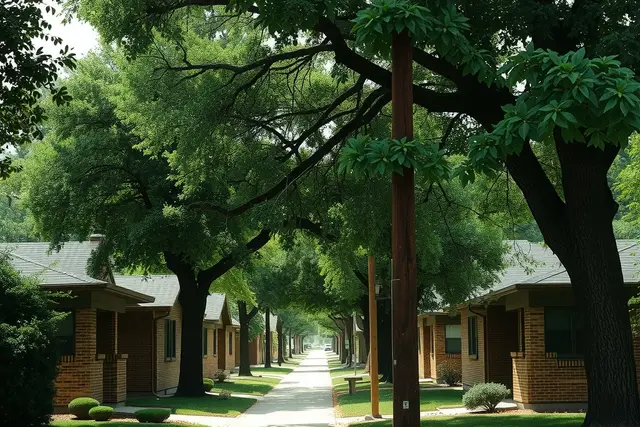
Englewood is small, old and densely built, more like Denver's older neighborhoods than its suburbs. Its sewer problems look like Denver's too: clay laterals, big trees and low basements.
Clogged drain in Englewood?
Answered 24/7
Including holidays and storms
Licensed local plumbers
Licensed in Colorado
Winter-ready
Frozen lines and thaw calls
Price ranges up front
Know the range before they come
Englewood homes and their sewer lines
Much of Englewood's housing went up between the 1920s and the 1950s: small brick bungalows and Tudors near Broadway and Hampden, and post-war ranches further out. Many still have their original clay sewer laterals, some partially replaced over the years.
Englewood operates its own sewer utility, which maintains the public mains; the line from your house to the main is the owner's.
Englewood's small lots also mean neighbors' trees matter as much as your own. A big elm or maple on the property line can send roots into your lateral just as easily as one in your front yard. When a plumber scopes the line, ask them to note the distance from the house to each root intrusion; matching that to the trees above usually shows which one is responsible and where a future repair would go.
Englewood's common drain problems
Root intrusion in clay laterals is the main cause of repeat backups, and the small lots mean the sewer often runs close to large street and yard trees. Basement floor drains and old cast iron under the slab can also corrode and narrow over time.
What drain work usually costs in Englewood
| Job | Typical range |
|---|---|
| Sink or tub line cleared | $125–$300 |
| Main line from a basement cleanout | $200–$500 |
| Root cutting in a clay lateral | $250–$600 |
| Camera inspection | $150–$400 |
| Section repair after a scope | $1,500–$5,000+ |
One of the metro's older suburbs
Englewood was incorporated in the early 1900s, and much of its housing dates from the 1920s through the 1950s: bungalows, small brick homes and post-war ranches on compact lots. Many still have their original clay sewer laterals, and some have Orangeburg or cast iron sections from later repairs. These lines are old enough that roots, offsets and cracked sections are common findings on a camera run.
Englewood's street trees are a big part of its character, and they're also the main reason older laterals clog. A spring backup in an Englewood bungalow almost always has roots behind it.
Englewood's own utilities
Englewood operates its own water and sewer utilities, and the city maintains the public sewer mains. The service lateral from the house to the main is generally the owner's responsibility. If you're unsure where your responsibility ends, the utilities department can explain. If several homes on your street back up at the same time, call the city; it could be a problem in the main.
A practical plan for an older Englewood line
- 01
Clear and scope
Get the line opened and a camera run on the same visit.
- 02
Identify the pipe
Clay with roots can be maintained or lined. Orangeburg usually needs replacing.
- 03
Schedule maintenance
Book root cutting before spring if roots are present.
- 04
Plan the permanent fix
Get repair or lining quotes while the line is working, not during a backup.
Signs your Englewood lateral needs attention
- Backups every spring at the basement floor drain
- Toilets gurgling when the tub drains
- Roots on the cable after a clearing
- A soft or sunken patch in the lawn above the line
Small lots and access
Englewood's compact lots mean laterals are often short but may pass close to garages, fences and neighbors' trees. If a section needs to be dug, a plumber will locate it precisely first. Trenchless lining is often a good fit here because it avoids disturbing tight yards and mature trees.
Orangeburg pipe
Some Englewood homes built or repaired in the mid-1900s have Orangeburg sewer pipe, a fiber pipe made from wood pulp and tar. It was used widely after the Second World War, but over time it softens, flattens into an oval and blisters. Roots push through it easily. If a camera shows Orangeburg, plan for replacement rather than repeated clearing, because the pipe will continue to deform.
Pipe bursting can often swap it out with only a small pit dug at each end of the run.
Alley mains
Many older Englewood neighborhoods have sewer mains in the alleys rather than under the street. If your home has a garage or trash pickup in the alley, your lateral may run toward the back of the lot. That changes where the cleanout is likely to be, where roots are likely to enter and how a repair would be done. A camera with a locator marks the route.
What to ask on an Englewood call
Ask whether the plumber can identify Orangeburg or cast iron on camera and what they recommend for each. If your main is in the alley, mention it so the plumber knows where to look for the cleanout. Ask for quotes on both maintenance and permanent repair.
Englewood through the seasons
Englewood's mature street trees make spring the busiest season for older laterals. Many homeowners here have learned to book root cutting every February or March. Summer storms can overload older mains and alley lines, and fall brings leaves that clog alley drains and gutters. During winter, crawlspace drains in the oldest homes can freeze when temperatures drop well below zero.
If your line has needed cutting two springs in a row, it's time to compare lining against another decade of cutting.
What moves the price in Englewood
Englewood's older lines bring their own costs. Orangeburg sections that have deformed can't be cleared like normal pipe and usually need replacing. Alley mains mean longer cable runs from the back of the lot. Heavy roots under mature street trees often need cutting plus jetting. On the other hand, short laterals on small lots keep many clearings quick. Get the camera video before agreeing to any repair, and ask for written quotes for both a spot repair and lining so you can compare.
An Englewood homeowner's checklist
Find out whether your main is in the alley or street. Have the line scoped for Orangeburg or roots. Schedule cutting if needed and compare with lining.
When an Englewood drain turns urgent
Water at the basement floor drain in spring usually means roots. Stop using water and call.
Call if you notice
- Spring backups at the basement floor drain
- Roots or clay fragments on the drain cable
- Slow drains throughout a small bungalow
- Rust flakes from an old cast iron drain
- A sewer smell in an older basement
Englewood drain questions
Does Englewood run its own sewer?+
Yes, the city maintains the public mains. The service line from your home is generally your responsibility.
Why do older Englewood homes back up in spring?+
Roots grow actively in spring and find the joints in clay laterals.
Is cast iron drain pipe a problem?+
Old cast iron can rust and scale inside, narrowing the pipe. A camera shows how much life is left.