Colorado · typical $150–$450
Basement & floor drains
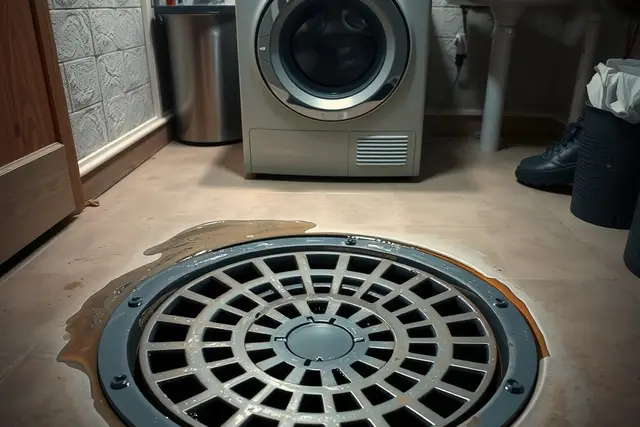
The basement floor drain is the lowest opening in most Colorado homes, which makes it the first place a sewer problem shows up. Water rising out of it is almost never about the floor drain itself; it's a sign that the main line beyond it is blocked.
Need floor drain help?
Answered 24/7
Including holidays and storms
Licensed local plumbers
Licensed in Colorado
Winter-ready
Frozen lines and thaw calls
Price ranges up front
Know the range before they come
Sounds like this?
- Water coming up through the basement floor drain
- Water around the drain when the washing machine empties
- A sewer or rotten-egg smell from the drain
- The drain gurgles when upstairs toilets flush
- A laundry or utility sink that drains slowly
What the floor drain is telling you
| What you see | Most likely cause |
|---|---|
| Water rises when the washer drains | Partial clog in the main line or the laundry branch |
| Water rises when upstairs toilets flush | Main sewer line blockage |
| Sewer smell, no water | Dry trap: the water seal has evaporated |
| Water around the drain after heavy rain | Groundwater or a downspout connection, not a clog |
| Drain is slow on its own | Debris, lint or sediment in the drain body |
The dry trap smell
Colorado's dry air evaporates the water seal in a floor drain that's rarely used, especially in a furnace room. Once the trap is dry, sewer gas comes straight up into the basement. Pour a gallon of water into the drain, then a tablespoon of mineral oil to slow evaporation. If the smell comes back within days, the trap or a vent may need attention.
Laundry and utility sinks
Basement laundry lines collect lint, which acts like hair in a shower drain. A lint trap on the washer discharge hose costs a few dollars and prevents most of these clogs. If the laundry standpipe overflows while the washer pumps out, it's either undersized or partly clogged; a plumber can tell which.
How a basement floor drain works
A floor drain has a trap below the grate that holds a small amount of water. That water seal is what keeps sewer gas out of the basement. The drain connects to the house's main drain line, usually close to where it leaves the foundation, which is why it's the lowest point in the system and the first place a main line backup appears.
Some older homes have floor drains that also take water from foundation drains or laundry. In a few cases, downspouts were tied into the sewer long ago, which is generally no longer allowed and can overload the line during storms.
Laundry standpipes and lint
Modern washers pump water out quickly. If the laundry standpipe or the line it feeds is partly clogged with lint, water can overflow the standpipe or come up the nearby floor drain. Adding a mesh lint catcher to the washer's discharge hose is the simplest fix; checking and emptying it every few loads keeps lint out of the drain entirely.
If the standpipe overflows even with a clean line, it may simply be too short or too narrow for a high-capacity washer, which a plumber can correct.
Radon, sumps and floor drains
Many Colorado homes have radon mitigation systems, and some basements also have sump pits for groundwater. A dry floor drain trap can let sewer gas and, in some cases, soil gas into the basement. Keeping traps filled, and sealing drains that are never used, helps. If you're installing or adjusting a radon system, mention any floor drains so they can be addressed.
Finishing a basement? Plan the drains first
- 01
Scope the main line
Know the line's condition before you cover the floor and walls.
- 02
Keep a cleanout accessible
Use an access panel rather than drywalling over it.
- 03
Decide on a backwater valve
If the house is low relative to the main, it can prevent future sewage backups.
- 04
Don't cover the floor drain
Leave it accessible and keep its trap filled.
What to do when water comes up the floor drain
- 01
Stop all water use
No flushing, showering, dishes or laundry anywhere in the house.
- 02
Protect what you can
Move boxes, rugs and furniture away from the drain. Keep children and pets out of the area.
- 03
Check for electrical hazards
If water is near outlets, extension cords or appliances, turn off power to that area at the breaker if it's safe to do so.
- 04
Call for a main line clearing
Tell the plumber water is rising from the floor drain. It almost always means the main line is blocked.
Floor drains in older homes
In pre-war Colorado homes, the floor drain and the pipe below it may be original cast iron or clay. Over decades, the trap can fill with sediment, crack or corrode, which makes the drain slow even when the main line is clear. A camera run through the floor drain itself shows its condition. Replacing an old floor drain and trap is a contained job that a plumber can usually do in a day.
Smells without water
A sewer smell in the basement with no water on the floor usually comes from a dry trap. Floor drains in furnace rooms and unfinished corners can go months without water, and Colorado's dry air evaporates the seal. Pouring a gallon of water down each floor drain every few weeks keeps the trap full; a tablespoon of mineral oil on top slows evaporation. Some plumbers install trap primers or seals that keep the trap from drying out automatically.
If the smell persists with a full trap, the problem may be a cracked pipe, a loose cleanout cap or a vent issue, all of which a plumber can track down with a smoke test or camera.
Is it groundwater or sewage?
Clear water around a floor drain after heavy rain or snowmelt, with no smell, is often groundwater coming up through the drain or seeping through the floor, not a sewer problem. Murky, smelly water, especially after using fixtures upstairs, is sewage from a blocked main. The difference matters: groundwater problems are handled with grading, gutters and sump pumps, while sewage backups need the main line cleared.
Keeping a floor drain healthy
Lift the grate once or twice a year and clear out hair, lint and debris that collect at the top. Pour water in regularly if the drain is rarely used. If you hear gurgling from the floor drain when upstairs fixtures run, that's an early sign of a partial blockage downstream, and a good time to have the line checked.
Common questions
Why is water coming up from my basement floor drain?+
Usually because the main sewer line is blocked and water from the rest of the house has nowhere else to go. Stop using water and call.
Why does my basement floor drain smell like sewer?+
Most often the trap has dried out. Refill it with water and a little mineral oil. If it persists, have the trap and vent checked.
Is water from a floor drain dangerous?+
If it's from a sewer backup, yes; treat it as contaminated. Keep people and pets away and avoid electrical hazards.
Can I install a backwater valve?+
Yes, a plumber can install one so sewage from the city main can't flow back in. It typically requires a permit.