Jefferson County · Foothills & Mountains
Drain Cleaning in Conifer, CO
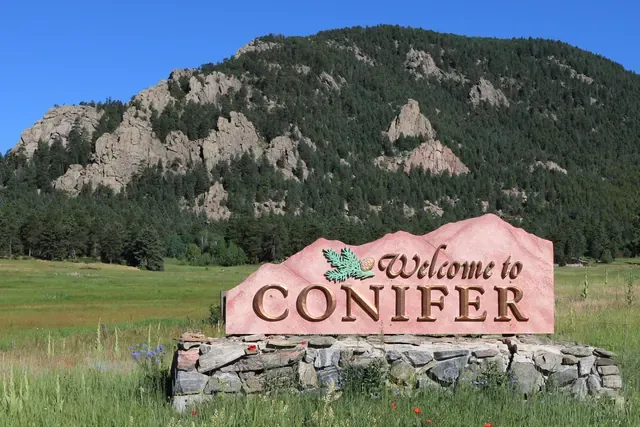
Conifer is an unincorporated mountain community along US 285 in Jefferson County, at around 8,000 feet. Homes are spread out among pines and rock outcrops, and nearly all of them rely on wells and septic systems.
Answered 24/7
Including holidays and storms
Licensed local plumbers
Licensed in Colorado
Winter-ready
Frozen lines and thaw calls
Price ranges up front
Know the range before they come
Conifer homes and their sewer lines
Most houses in the Conifer area were built from the 1970s onward, from small cabins and split-levels to large homes on wooded lots in subdivisions off 285 and the surrounding roads.
Public sewer is rare, so the line leaving the house almost always runs to a septic tank. Granite close to the surface means tanks and lines are sometimes placed where the ground allowed, not always where you'd expect.
Steep driveways, crawlspaces and hillside walls are standard. Water lines and drains in those spaces need protection from cold that can last for days at this elevation.
What clogs drains in Conifer
Frozen lines lead the list in winter. Year-round, the most common calls are kitchen and bathroom clogs, slow drains caused by a tank that needs pumping, and clogs in the line to the tank where it bends around rock or crosses a low spot.
What drain work usually costs in Conifer
| Job | Typical range |
|---|---|
| Kitchen or bathroom clog cleared | $125–$325 |
| Line to the septic tank cleared | $200–$550 |
| Thawing a frozen line | $200–$650 |
| Camera inspection and line locating | $150–$400 |
| Clearing a frozen condensate drain | $150–$350 |
Granite, slopes and where the pipe went
Much of the Conifer area sits on granite that comes close to the surface. When homes were built, excavators worked around the rock, and septic tanks and building sewers went wherever the ground allowed. The result is that drain lines here sometimes take odd routes, bend sharply or run shallower than ideal. That matters for two reasons: sharp bends catch solids, and shallow lines freeze. If a line clogs or freezes repeatedly in the same place, a camera with a locator shows where it runs and how deep.
High-altitude cold
At around 8,000 feet, Conifer gets long cold stretches where nights fall well below zero. Drains freeze where they meet the cold: in crawlspaces, exterior walls, under bathrooms over garages and in any line that runs shallow outside. Furnace condensate drains are another regular cause of winter calls, since a frozen condensate line shuts the furnace down. Rerouting it inside or adding heat cable usually solves that for good.
Snow cover actually insulates the ground. The riskiest times are deep cold snaps with little or no snow on the ground.
Septic systems and slow drains
Almost every Conifer home uses a septic system. When the whole house slows down, the tank and field are as likely a cause as the pipe. Knowing when the tank was last pumped, and whether the field area has been soggy or smelly, helps narrow it down. If the tank is fine, a plumber can clear the line to it and check the inlet.
A winter plan for a Conifer home
- 01
Map your lines
A camera and locator show where drain lines run and how deep.
- 02
Protect the shallow spots
Insulate or add heat cable where lines run near the surface or in cold spaces.
- 03
Check the furnace drain
Make sure the condensate line can't freeze.
- 04
Keep heat on
Even when away, keep the house warm enough to protect the plumbing.
Conifer drain warning signs
- A fixture on an outside wall that stops after a bitter night
- The furnace cycling off with gurgling at the unit
- Gurgling throughout the house after laundry
- Wet or smelly ground near the leach field
- A clog that returns at the same bend
Telling the plumber about your Conifer home
Mention that you're on septic, how far the tank is from the house, whether the driveway is steep or icy and which fixtures are affected. If a line froze, describe the room or wall it's in. Plumbers who work the 285 corridor in winter often carry thawing equipment, and knowing in advance helps.
Costs in Conifer
Simple clogs here cost about what they do in the metro. Frozen lines, steep driveways and lines that need locating are what raise the price. A one-time fix for a line that freezes every year, such as insulation, heat cable or a short reroute, often pays for itself within a winter or two.
Why a frozen drain can crack
Water expands as it freezes, and a trap or low spot full of ice can split plastic fittings or crack old cast iron. The damage often doesn't show until the line thaws and starts leaking inside a wall or under a floor. After any freeze in a Conifer home, run water through the affected fixture and watch for drips in the cabinet, the ceiling below or the crawlspace. Catching a small crack early keeps a frozen drain from becoming a water damage claim, which is far more expensive and disruptive than the thaw itself.
Part-time homes and rentals off 285
Some Conifer homes are weekend places or rentals, and an empty house in a cold snap is the most likely to freeze. When nobody is running water, traps and shallow lines can freeze solid, and a crack in a frozen drain may not show up until the next guest runs a shower. A neighbor or property manager who checks the house during long cold stretches, plus a thermostat that stays well above freezing, prevents most of these calls.
Wells, softeners and drain lines
Conifer wells often produce hard water with iron or manganese, and many homes run softeners or filters. Mineral scale builds up in drain lines over time, and treatment system backwash adds water to the septic system. Knowing where your treatment equipment drains helps diagnose slow floor drains and laundry lines. Some septic installers recommend routing backwash away from the tank, so check what your installer advised.
Buying a home in the Conifer hills
Plan on a septic inspection, a well test and, for older homes, a camera inspection of the line from the house to the tank. Ask how drain lines are protected from freezing, especially in crawlspaces and under additions. Those checks cover the most common and costly surprises in mountain homes along 285.
Call if you notice
- A drain that freezes overnight
- Gurgling in every fixture at once
- A line to the tank that bends around rock
- Furnace condensate line icing
- A home left empty during a cold snap
Conifer drain questions
Why are drain lines in Conifer so hard to locate?+
Shallow granite meant installers routed lines around rock. A camera with a locator traces the real path.
Can a plumber thaw a frozen line under the house?+
Usually, with steam or hot-water equipment through a cleanout or the fixture.
Is it the tank or the line?+
If every drain is slow, check when the tank was last pumped. A plumber can confirm the line is open.