Colorado · typical $200–$600
Frozen drain & sewer lines
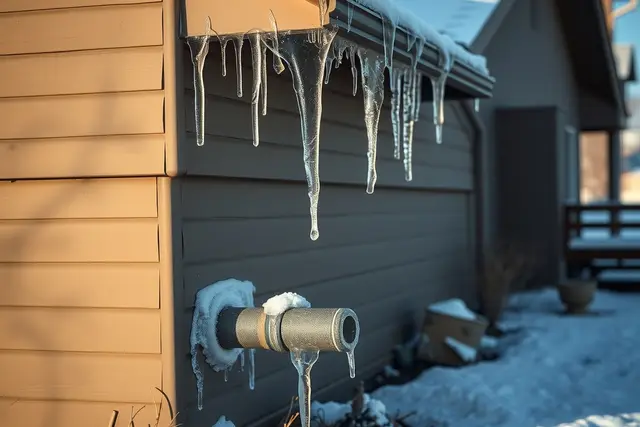
Most people think of frozen supply pipes, but drains freeze too: lines that run through unheated crawlspaces, garages and exterior walls, condensate lines from high-efficiency furnaces, and shallow sewer sections during long cold snaps. A frozen drain looks exactly like a clog, but clearing it takes heat, not a cable.
Need frozen drain line help?
Answered 24/7
Including holidays and storms
Licensed local plumbers
Licensed in Colorado
Winter-ready
Frozen lines and thaw calls
Price ranges up front
Know the range before they come
Sounds like this?
- A drain stopped working overnight during subzero weather
- Furnace shut down with a full condensate drain or ice at the outlet
- Drains in an addition or over a crawlspace freezing first
- Water backing up in the lowest fixtures after a long cold snap
- Ice visible where a drain pipe exits the house
Where drains freeze in Colorado homes
- Kitchen and laundry lines in exterior walls, especially on the north side
- Drains under floors over vented crawlspaces in older homes
- Lines in attached garages or bonus rooms above them
- High-efficiency furnace condensate lines that exit the house; when they freeze, the furnace shuts itself off
- Shallow sewer sections after weeks of hard cold, more common in mountain towns
What to do and not do
- 01
Stop sending water down it
Water poured into a frozen drain just adds to the ice and can back up into the house.
- 02
Warm the room, gently
Open cabinet doors and raise the thermostat. A space heater in the area (never left unattended) can help.
- 03
Never use an open flame
Torches on pipes start house fires every winter. Plastic drain pipe can also melt.
- 04
Call if it doesn't clear
Plumbers use steamers and hot-water jetters that thaw from inside the pipe without damaging it.
Preventing it next winter
Insulate drain lines in crawlspaces and exterior walls, seal crawlspace vents for winter, and route furnace condensate lines so they can't freeze at the outlet (a plumber or HVAC tech can add a heat cable or change the exit point). During a deep cold snap, running a little warm water through vulnerable drains a few times a day helps. More in preventing frozen drain lines.
Signs a drain is frozen, not clogged
| Clue | Points to |
|---|---|
| Started during a cold snap, drain worked fine before | Freezing |
| Drain runs through an exterior wall, garage or crawlspace | Freezing |
| Furnace shut off at the same time | Frozen condensate line |
| Slow for weeks before the cold | Clog (possibly made worse by cold) |
| Other drains backing up too | Main line problem; could be frozen or clogged |
Mountain and plains differences
In mountain towns, long cold periods and deep frost can freeze shallow sections of sewer lines and septic lines, not just interior drains. On the plains, wind is the bigger factor: it drives cold air into garages, crawlspaces and wall cavities, freezing drains on the windward side of the house. Along the Front Range, the classic pattern is a sudden arctic front after mild weather, when nobody has prepared.
Vacation and second homes
Homes left empty in winter are at the highest risk because no warm water moves through the drains. Keep the heat set to at least the mid-50s, leave cabinet doors open on exterior walls and ask a neighbor to run water in each fixture during long cold spells. For mountain second homes, a plumber can winterize the plumbing properly, including adding antifreeze to traps, if the house will be empty for weeks.
After the thaw
Once a line thaws, run water and watch for leaks under sinks, in the basement ceiling and around the furnace. Ice can crack fittings and older pipe, and a crack may only show once water flows again. If a drain still runs slowly, there may be a clog that helped it freeze in the first place. Clearing it now prevents a repeat the next time temperatures drop.
Furnace condensate lines in detail
High-efficiency gas furnaces produce water as they burn, and that water drains through a small plastic line, often to a floor drain or a pump, sometimes straight outside. When the outside end freezes, water backs up inside the furnace and a safety switch shuts it off, usually in the middle of the coldest night. The fix is to thaw the line, then reroute it to drain indoors, insulate it or add heat cable so it can't freeze again.
What a frozen drain call costs
After-hours visits during a cold snap cost more, and plumbers are busiest on the first very cold morning, so preventing the freeze is worth the effort.
| Situation | Typical range |
|---|---|
| Thawing an interior drain in a wall or crawlspace | $200–$450 |
| Thawing a frozen main or sewer section | $300–$600 |
| Condensate line thaw and reroute | $150–$450 |
| Insulation or heat cable added afterward | $150–$500 |
Heat cable and insulation done right
Self-regulating heat cable runs along the pipe and warms only when temperatures drop, so it uses little power the rest of the year. It should be plugged into a protected outlet and covered with insulation to work well. Foam pipe insulation alone helps in spaces that stay near freezing but won't save a pipe in a garage exposed to subzero wind. For drains that freeze every winter, the most reliable fix is often rerouting the line so it runs through a heated space rather than an exterior wall or open crawlspace.
A plumber can recommend the right combination after seeing where the line runs, and it's usually much cheaper than an emergency thaw each January.
Common questions on cold-weather drains
- Leaving a faucet dripping protects the supply line in that wall, and the trickle also keeps a little warm water moving through the drain below it.
- Adding salt or antifreeze to an active drain isn't a fix; it only helps when a home is being winterized and left empty.
- A frozen drain in an upstairs bathroom over the garage is a strong sign the floor needs better insulation.
Garages and bonus rooms
Many newer Front Range homes have a bedroom or bonus room above an attached garage, with a bathroom whose drain runs through the garage ceiling. If the garage is uninsulated and the door is left open on a cold day, that drain can freeze quickly. Keeping the garage door closed during cold snaps and insulating the ceiling under the bathroom are simple, effective fixes.
Common questions
Can a drain line freeze?+
Yes, especially lines in exterior walls, crawlspaces and garages, and furnace condensate lines that exit the house.
How do plumbers thaw a frozen drain?+
Usually with a steamer or a hot-water jetter fed into the line, which melts the ice from inside without damaging the pipe.
Will a frozen drain pipe burst?+
Drain pipes aren't pressurized, so they burst less often than supply lines, but ice can still crack older pipe and cause backups.
Why did my furnace stop when it got cold?+
A frozen condensate drain is a common cause with high-efficiency furnaces. The safety switch shuts the furnace off when the drain can't empty.