Mesa County · Western Slope
Drain Cleaning in Clifton, CO
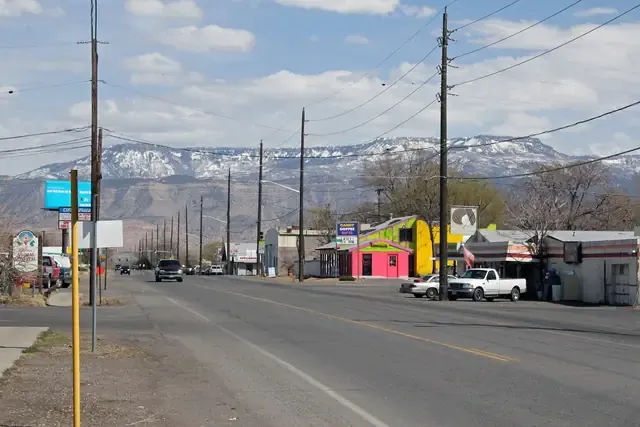
Clifton is an unincorporated community of about 20,400 people in Mesa County, on US 6 between Grand Junction and Palisade, with I-70 along its northern edge and the Colorado River along its southern edge. Its post office opened in 1900, and the name comes from the cliffs near the original townsite. It is the largest place in the Grand Valley that is not a city.
Answered 24/7
Including holidays and storms
Licensed local plumbers
Licensed in Colorado
Winter-ready
Frozen lines and thaw calls
Price ranges up front
Know the range before they come
Clifton homes and their sewer lines
Clifton housing runs from small postwar frame houses near US 6 to 1970s and 1980s ranches, manufactured home parks and newer subdivisions on former orchard and pasture ground.
Most of Clifton drains to the Clifton Sanitation District, formed by election in 1967, which now maintains more than 75 miles of collection pipe and a 2.5 million gallon per day plant on the Colorado River. Some neighborhoods on the west side are served by other Grand Valley sewer providers, and a few rural lots still use septic.
Older Clifton service lines are often clay or concrete, the same materials the district spent decades replacing in its own mains. Newer homes have PVC.
Clifton drain problems
Clifton drain calls come from three directions at once: old clay service lines with root intrusion near irrigation ditches, grease and wipes in the many rentals and manufactured homes, and salty Mancos shale soil in the eastern Grand Valley that is hard on concrete and cast iron.
What drain work usually costs in Clifton
| Job | Typical range |
|---|---|
| Kitchen, bath or toilet clog | $125–$300 |
| Main line cleared to the street | $200–$500 |
| Root cutting in a clay lateral | $250–$650 |
| Camera inspection | $150–$400 |
| Hydro jetting a grease-heavy line | $350–$850 |
The biggest unincorporated town in the Grand Valley
Clifton has more people than Fruita and Palisade put together, yet it has never incorporated. It grew along US 6 and the railroad as orchard and farm country, then filled in after the Second World War and again in the energy booms of the 1970s and 2000s, when Grand Junction workers looked east for cheaper lots. The result is a patchwork: postwar houses on old farm parcels, manufactured home parks, apartment complexes near the highway, and subdivisions laid out on former fields from Interstate 70 down toward the Colorado River.
Because Clifton never had a single town government laying out streets and utilities, the age and material of the pipe under any given house depends heavily on when that particular parcel was developed.
From lagoons to a regional plant
Clifton Sanitation District No. 2 was created by an election in 1967 and built its first collection lines with a 1968 bond and a federal grant. By the early 1990s, two districts were running Clifton's wastewater with more than 20 miles of old clay and concrete pipe, several lift stations and three lagoon systems that discharged to the Colorado River. Consolidation followed, and a regional treatment plant broke ground in December 2006 to replace the lagoons. Today the Clifton district maintains more than 75 miles of mains and treats up to 2.5 million gallons a day, and it has agreed to take wastewater from Whitewater and from the Town of Palisade.
For homeowners, the history explains why so many Clifton laterals are clay or concrete: they were laid to match the district's original mains in the late 1960s and 1970s.
Irrigation water and roots
Grand Valley irrigation ditches and laterals cross Clifton in every direction, and lawns and gardens are watered heavily from spring to fall. That steady moisture is good for trees and bad for clay sewer lines. Elms, cottonwoods and fruit trees send fine roots into every hairline crack and joint, and by late summer a lateral can be choked with a mat of roots. A line that slows every August and clears in winter is a classic Clifton pattern. Cutting the roots restores flow, and a camera shows whether the joint needs a spot repair or the whole line needs attention.
Shale soil and pipe that moves
Much of the eastern Grand Valley sits on soil weathered from Mancos shale, which carries salts and sulfates and swells and shrinks with moisture. That ground is hard on concrete pipe and unlined cast iron, and the seasonal movement can open clay joints or leave a belly in a line where water and waste settle. A belly does not always cause a full clog, but it makes paper and grease collect in the same spot. If a Clifton line clogs again a few months after cleaning, ask for a camera so you know whether the pipe itself has sagged.
Shared lines in parks and complexes
Clifton has a lot of manufactured home parks and multi-unit buildings, and many of them have private sewer lines that run under the park or complex before reaching the district main. When a clog sits in a shared section, several homes back up at once and the lowest unit gets the worst of it. In those cases, the park owner or property manager is usually responsible for the shared line. If your neighbors are seeing the same thing, tell the plumber and the manager before anyone starts snaking from inside a single home.
If a Clifton drain backs up
- 01
Stop running water
Washers and dishwashers can push more water into a blocked line.
- 02
Check the neighbors
In a park or complex, ask whether other units are slow too.
- 03
Find the cleanout
Most Clifton homes have one near the foundation or in the front yard.
- 04
Note the pattern
Tell the plumber whether it happens every summer, after laundry or at random.
Clifton warning signs
- A slow line every irrigation season
- Several homes in the same park backing up
- A Clifton toilet that gurgles as the bathtub empties
- Sewer smell near the cleanout
- A wet patch in the yard over the lateral
Keeping Clifton lines clear
Scrape plates into the trash, not the sink, and keep wipes out of toilets even when the package says flushable. If the house has an older clay lateral and big trees, a root cutting every year or two before the late-summer peak is often cheaper than an emergency visit. When you buy a Clifton house built before about 1980, a sewer scope before closing shows what kind of pipe you are inheriting.
Call if you notice
- Roots in a Clifton clay lateral beside an irrigation lateral
- A main line clog in a manufactured home park shared line
- Scale and grease in a kitchen line fed by hard Grand Valley water
- A sag in a service line laid in shifting shale soil
- Sewer gas from a dried-out trap in a vacant rental
Clifton drain questions
Who handles sewer in Clifton?+
Most of Clifton is in the Clifton Sanitation District. The district maintains the mains; the service line from the house to the main is generally the owner's.
Why do Clifton lines get roots in summer?+
Irrigation water keeps the soil wet along ditches and lawns from spring to fall, and trees send roots toward any cracked joint carrying warm water.
Is hard water a problem for Clifton drains?+
It adds scale inside pipes and fixtures over time, which catches grease and hair. Regular cleaning of kitchen lines helps.