Colorado · typical $150–$400
Sewer camera inspection
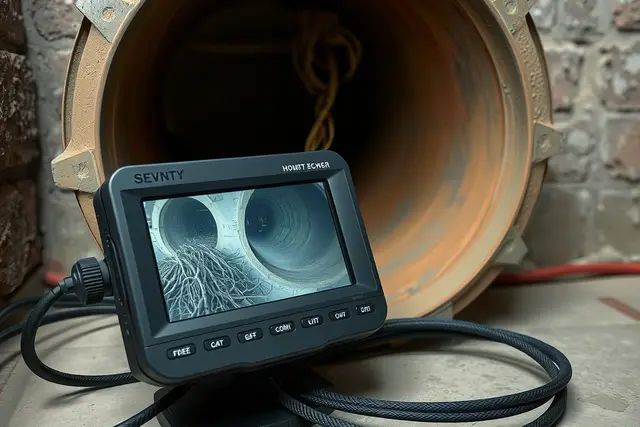
A sewer camera inspection, often called a sewer scope, sends a waterproof camera down the main line and records what it sees: roots, cracks, sags where water pools, offset joints and old repairs. In Colorado it's a standard step when buying an older home, and the fastest way to understand a line that keeps clogging.
Need sewer camera inspection help?
Answered 24/7
Including holidays and storms
Licensed local plumbers
Licensed in Colorado
Winter-ready
Frozen lines and thaw calls
Price ranges up front
Know the range before they come
Sounds like this?
- Buying a home built before about 1980
- A main line that has backed up more than once
- Roots or bits of clay pipe came out on a drain cable
- A plumber has recommended jetting or replacement
- A sinkhole or soggy strip of lawn over the sewer path
What the camera finds
| Finding | What it means | Typical next step |
|---|---|---|
| Fine roots at joints | Roots entering through clay pipe joints | Root cutting or jetting; watch yearly |
| Heavy roots, pipe barely visible | Advanced intrusion | Cutting, then repair or lining |
| Belly (sag) | A low spot where water and waste sit | Monitor if minor; repair if solids collect |
| Offset or separated joint | Sections shifted, often from soil movement | Spot repair or lining |
| Crack or broken section | Structural failure | Repair before jetting |
| Grease or scale buildup | Narrowed pipe | Hydro jetting |
Scoping before you buy
A standard home inspection doesn't look inside the sewer line, and in Colorado the buyer usually inherits responsibility for the lateral all the way to the city main. Replacing a broken clay lateral can run into five figures, so many buyers order a scope during the inspection period and use the video in negotiations. Ask for the recording and a short written summary with distances from the cleanout.
How the inspection works
- 01
Access
The camera goes in through the main cleanout, or a toilet is pulled if there isn't one.
- 02
Record the run
The camera is pushed toward the city main while the screen shows distance. Problem spots are noted with footage.
- 03
Locate if needed
A transmitter in the camera head lets the plumber mark the exact spot and depth on the surface, so any repair digs once.
- 04
Get the video
You should receive the recording. It's useful for insurance, home sales and getting second opinions.
Pipe materials you'll see in Colorado homes
Many older laterals are a mix: original clay or cast iron with sections replaced in PVC after an earlier repair. The camera shows each change in material, which helps explain where trouble starts.
| Material | Typical era | How it ages |
|---|---|---|
| Vitrified clay | Before about 1975 | Strong but brittle; joints let in roots |
| Cast iron | Before about 1975 | Rusts and scales inside, can crack |
| Orangeburg (fiber) | About 1945–1972 | Softens, deforms and collapses |
| ABS / PVC plastic | 1970s onward | Durable; problems usually at fittings or from settling |
Reading a scope report
- 01
Start with distances
Every finding should note how far it is from the cleanout. That tells you whether it's under your yard, the sidewalk or the street.
- 02
Separate maintenance from repair
Light roots or buildup can be managed with cleaning. Cracks, breaks and collapses need repair.
- 03
Ask about the connection to the main
Problems right at the city main can be harder and costlier to fix; knowing early helps planning.
- 04
Keep the video
It's useful for insurance, for selling the house and for comparing quotes.
Scoping during a home purchase
In a typical Colorado purchase, the buyer has an inspection period of a week or two. A sewer scope fits easily inside it. If the scope finds a problem, the buyer can ask the seller for a repair, a price reduction or a credit at closing, supported by the video and a written estimate. If the scope is clean, it's still worth keeping the recording; it documents the line's condition on the day you bought the house.
For homes built after about 1990 with PVC laterals, a scope is less critical but still inexpensive peace of mind, especially if there are large trees near the sewer path.
What a scope costs and what affects the price
Most Colorado sewer scopes fall between $150 and $400. Ask whether the recording and a written summary are included; a scope without the video is far less useful.
| Factor | Effect on price |
|---|---|
| Accessible cleanout | Lower; quick setup |
| Pulling a toilet for access | Higher; extra labor and a new wax ring |
| Long lateral or alley main | Higher; more footage to record |
| Line locating and depth marking | Adds to the base price |
| Clearing needed first | Clearing is billed separately |
When to scope even without a problem
- Before buying any home built before about 1980
- Before finishing a basement
- Before planting large trees near the sewer path
- After major excavation or construction nearby, such as a new driveway or a neighbor's foundation work
- Every few years on a line with known roots, to catch problems before a backup
Camera inspection after a backup
Right after a main line is cleared is the best time for a camera inspection. The line is open, the plumber is already set up and the cause is fresh. If the camera shows wipes or grease and an otherwise sound pipe, you've learned what to change at home. If it shows roots, cracks or a sag, you can plan maintenance or a repair before the next backup instead of during it.
Ask the plumber to narrate as they go, pointing out joints, material changes and anything unusual. A two-minute explanation while the image is on the screen is often more useful than a written report later.
Septic homes and mountain properties
Homes on septic systems, common in the foothills and on rural lots, have a line from the house to the tank instead of to a city main. A camera inspection of that line is just as useful, showing roots, sags and breaks before the tank. If you're buying a septic property, pair the camera inspection with a separate septic inspection; the camera shows the pipe, but not the condition of the tank or leach field.
How long a scope takes
With an accessible cleanout, setting up and running the camera to the city main usually takes 30 minutes to an hour. Locating and marking the line adds a little more. If the line has to be cleared first, plan on the visit taking longer, and expect the clearing to be priced separately from the inspection itself.
Common questions
How much is a sewer scope in Colorado?+
Typically $150 to $400 for a recorded inspection, more if the plumber also locates and marks the line.
Should I get a sewer scope when buying a house?+
For homes built before about 1980, or with large trees in the yard, it's widely recommended in Colorado. It's inexpensive compared with what a broken lateral costs.
Can a camera inspection be done if the line is clogged?+
The camera can't see through a full blockage. The line is usually cleared first, then scoped.
Do I get a copy of the video?+
You should. Ask for the recording and a summary of findings with distances before the plumber leaves.