Phillips County · Northern Colorado
Drain Cleaning in Holyoke, CO
Holyoke is the seat of Phillips County, a farm town of about 2,350 people at roughly 3,740 feet on the high plains near the Nebraska line. The Burlington and Missouri railroad laid it out in 1887 on Frenchman Creek, lots went on sale on September 21 of that year, and the town was named for Edward A. Holyoke, son-in-law of the railroad's general superintendent.
Answered 24/7
Including holidays and storms
Licensed local plumbers
Licensed in Colorado
Winter-ready
Frozen lines and thaw calls
Price ranges up front
Know the range before they come
Holyoke homes and their sewer lines
Holyoke's older streets on either side of Interocean Avenue hold frame and brick houses from the 1890s through the 1950s, many with full basements. Ranch houses from the 1960s and 1970s and some manufactured homes line the newer edges of town.
The City of Holyoke provides water from deep wells in the Ogallala aquifer and runs the sewer, which flows to wastewater lagoons on County Road 41 east of town.
Pre-1970 houses in Holyoke usually drain through cast iron indoors and clay tile laterals; a basement floor drain is often the lowest opening in the house and the first place a backup shows.
Holyoke drain problems
Holyoke drain trouble mostly comes from age and trees. The town planted shade trees early on a treeless prairie, and a century later their roots are deep in old clay laterals, while basements put floor drains below the line where a blockage first spills over.
Holyoke drain cleaning price ranges
| Job | Typical range |
|---|---|
| Sink, tub or toilet clog in a Holyoke house | $125–$300 |
| Holyoke main line cleared to the city sewer | $200–$550 |
| Root cutting in a Holyoke clay lateral | $250–$650 |
| Basement floor drain cleared in Holyoke | $150–$450 |
| Sewer camera inspection in Holyoke | $150–$400 |
| Hydro jetting old Holyoke cast iron | $350–$900 |
A railroad division point on Frenchman Creek
Holyoke began as a plan on paper. In 1887 the Burlington and Missouri River Railroad pushed its line west from Nebraska toward Denver, and its land company laid out towns along the route on a neat grid. Holyoke was set on Frenchman Creek as a division point, and George E. Clark bought the first lot on September 21, 1887. The town incorporated in 1888, and when Phillips County was carved out of Logan County in 1889, Holyoke became its seat.
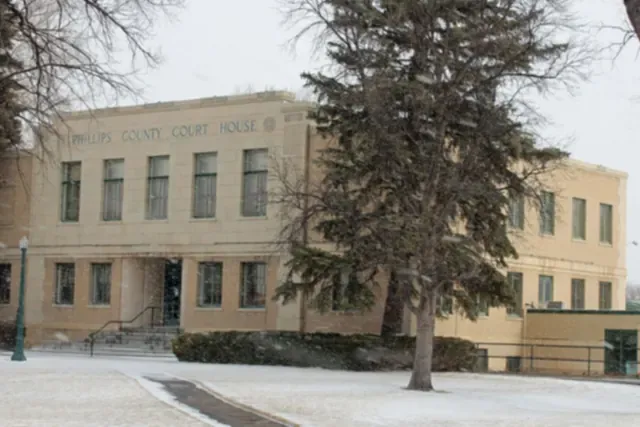
Interocean Avenue, which is also US 385, is the main street. The Phillips County Courthouse stands at 221 Interocean, and the Burge Hotel, built in 1912, is a few doors away. US 6 and Highway 23 cross town as well, and the Nebraska line is about ten miles east.
Water from deep wells
There was no river to draw from on the Holyoke prairie, so water came from the ground from the start. The railroad drilled a well in September 1887, 187 feet deep, and two public wells went down on the main street the same year. Today the City of Holyoke still pumps from wells, drawing on the Ogallala aquifer that also irrigates the corn fields around town. Well water from the plains is hard, and over the years calcium scale builds inside cast iron drains and on the walls of kitchen and laundry lines, narrowing them until grease and lint catch.
Lagoons on County Road 41
Holyoke's sewage flows to the city's wastewater lagoons east of town on County Road 41. Lagoons work by letting sunlight, air and bacteria break down waste over time, and they don't handle things that don't break down. The city has had trouble with wipes clogging the lift station that pushes sewage out to the lagoons, and with motor oil dumped down drains that ended up floating on a lagoon. What goes down a drain in Holyoke matters for your own pipes and for the city's system.
The city owns the mains, the lift station and the lagoons. The lateral from your house to the city main is the owner's responsibility, and that is where most Holyoke backups start.
Basements under old Holyoke houses
Many of Holyoke's early 1900s houses were built with full basements, and later owners finished them or added laundry rooms and bathrooms. The basement floor drain is often the lowest drain in the house, so when the main line blocks, sewage comes up there first. If you have a Holyoke house with a basement, clear the area around the floor drain, know where your cleanout is, and consider a backwater valve if you have had a backup before.
Shade trees on the prairie
When Holyoke was founded, the plains around it had few trees. Settlers planted elms, ash, cottonwoods and evergreens to break the wind and shade houses, and many of those trees are now huge. Their roots reach out far beyond the drip line and find the joints in clay tile laterals, which were laid in short sections with mortar or packing that loosens over time. A Holyoke line with roots usually slows down for weeks before it stops. Root cutting reopens it; a camera then shows whether the pipe is sound enough to keep or needs a liner or replacement.
Cast iron that has had a long life
A house built in Holyoke before the 1960s probably has cast iron drain and vent pipe inside, and much of it is now 70 to 100 years old. Cast iron rusts from the inside, building rough scale that snags paper and grease, and eventually rusts through along the bottom of horizontal runs. Hydro jetting can clear scale without damaging pipe that is still sound, and a camera shows whether the bottom of the pipe has corroded. If it has, sections should be replaced before they leak under a floor.
Blizzards and plains cold
Holyoke's record low is 36 below zero, and its record high is 110 degrees, which gives a sense of the extremes. Winter wind across the open plains drives cold into crawlspaces and through gaps in old foundations. Drains along north walls, in unheated porches and in crawlspaces freeze first. Seal gaps in the foundation, keep crawlspace vents closed in winter and keep heat in rooms with plumbing. If a drain freezes, a plumber can thaw it with steam or heated water.
Farms and homes outside town
Outside Holyoke's city limits, farmhouses and acreage homes use private wells and septic systems. A septic system needs pumping every three to five years, and it needs to be protected from grease, wipes and heavy water use all at once. Signs of a failing system include slow drains throughout the house, gurgling, sewage odor outdoors and wet ground over the leach field. A plumber can clear the line to the tank; a septic contractor pumps it.
When a Holyoke drain backs up
- 01
Stop running water
In a Holyoke house with a blocked main, more water just rises at the floor drain.
- 02
Check the neighbors
If several houses on your Holyoke block back up, call the city.
- 03
Find the cleanout
Look in the basement near where the main leaves, or outside along the foundation.
- 04
Keep wipes out
Wipes catch in Holyoke's old lines and at the city's lift station.
Holyoke warning signs
- Water at a Holyoke basement floor drain when the washer empties
- Roots on the cable after clearing a Holyoke lateral
- Several Holyoke drains slowing at once
- A sewer smell in a Holyoke basement
- Rust flakes or scale coming out of an old cast iron cleanout
Call if you notice
- Elm and ash roots in a century-old Holyoke clay lateral
- A basement floor drain on a Holyoke side street backing up on wash day
- Wipes catching in a main line before they reach the city lift station
- A drain near the north foundation freezing in a plains blizzard
- A farmhouse septic line slowing outside the Holyoke city limits
Holyoke drain questions
Who fixes sewer problems in Holyoke?+
The City of Holyoke maintains the public sewer mains, lift station and lagoons. The lateral from your house to the city main is the property owner's to maintain and repair.
Why does the city ask people not to flush wipes?+
Wipes don't break down. Holyoke has dealt with them clogging pumps at its lift station, and in house lines they snag on roots and rough cast iron, starting backups.
How cold does Holyoke get?+
Holyoke's record low is 36 below zero, and plains wind makes cold snaps worse. Drains in crawlspaces, on outside walls and in unheated porches freeze first.