Washington County · Northern Colorado
Drain Cleaning in Akron, CO
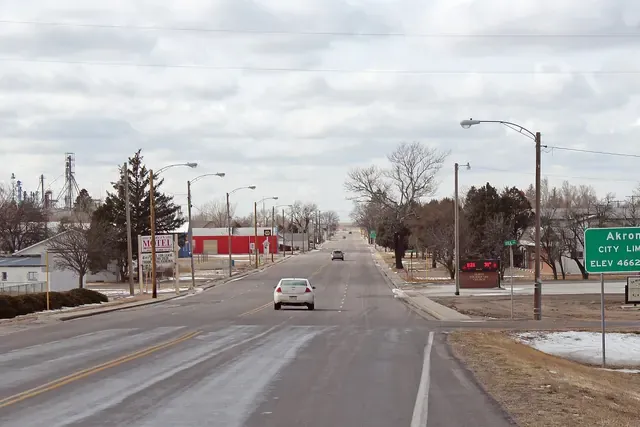
Akron is the seat of Washington County and its largest town, about 1,760 people at the junction of US 34 and State Highway 63 on the high plains, at roughly 4,660 feet. It started in 1882 as a railroad camp halfway between McCook, Nebraska, and Denver, took its name from Akron, Ohio, and incorporated in September 1887, the same year the county was formed with Akron as its seat.
Answered 24/7
Including holidays and storms
Licensed local plumbers
Licensed in Colorado
Winter-ready
Frozen lines and thaw calls
Price ranges up front
Know the range before they come
Akron homes and their sewer lines
Akron housing is mostly older: frame and brick homes from the early 1900s near Main Avenue, postwar ranches and bungalows on the grid south of the tracks, manufactured homes, and farmhouses on the wheat ground around town.
The Town of Akron runs water and wastewater as separate enterprise funds. Its water comes from a field of wells feeding a large storage tank, and a 2025 state funding list includes a planned new Akron wastewater treatment plant with collection system rehabilitation, estimated at $31 million. Farms outside town use private wells and septic.
Many older Akron homes still drain through cast iron inside and clay tile out to the town main; houses from the 1980s on generally have PVC.
Akron drain problems
Akron drain calls come from aging pipe, wind and cold. Clay laterals laid generations ago crack and let in roots from shade trees and shelterbelts, cast iron scales inside, and hard plains winters freeze drains in porches, crawlspaces and unheated utility rooms.
What drain work usually costs in Akron
| Job | Typical range |
|---|---|
| Kitchen, bath or toilet clog | $125–$300 |
| Main line cleared to the Akron town main | $200–$550 |
| Root cutting in a clay lateral | $250–$650 |
| Thawing a frozen drain | $200–$600 |
| Camera inspection with locate | $150–$400 |
| Farm septic line cleared | $200–$550 |
A railroad camp that became the county seat
Akron was laid out in 1882 by the Burlington railroad as a camp on the new line between McCook and Denver, and the story goes that a railroad man's wife named it for her hometown of Akron, Ohio. A post office opened in January 1883. When the legislature carved Washington County out of Weld County in February 1887, Akron became the seat, and it has been the only one; the town incorporated that September. A 1908 postcard of the Hotel Akron shows how busy the depot district once was.
Today Akron is the biggest town in a county with only two incorporated places, and it is the place where the county's courthouse, fairgrounds, school and the Colorado Plains Regional Airport all sit. That makes it the hub for farm families across a wide stretch of wheat and corn ground, which is why a plumber's day in Akron often includes both town houses and farmsteads miles out.
Town wells, two enterprise funds and a planned plant
The Town of Akron runs its water and wastewater utilities as two separate enterprise funds, paid for by the people who use them rather than by the general budget. State water records describe roughly 880 taps fed by ten wells that pump into a 1.5 million gallon tank built in 1996. On the sewer side, Colorado's 2025 clean water funding list includes an Akron project for a new wastewater treatment plant, biosolids handling and collection system rehabilitation, with a $31 million estimate.
For a homeowner, the line that matters is the one from the foundation to the town main. That lateral belongs to the house. If the town is rehabilitating mains on your block, it is a good time to have your own line scoped, because a contractor can often tie a repaired lateral into fresh pipe more cleanly than into an old one.
Old clay under Akron yards
Most of Akron's housing went up long before plastic sewer pipe. Homes along Main Avenue and the streets around the courthouse date from the 1900s to the 1920s, and the grid filled in with postwar ranches in the 1950s and 1960s. Those houses were connected with vitrified clay tile in short sections, and every joint is a place where soil movement or a root can open a gap. A camera run on an older Akron lateral commonly shows a few offset joints, a little root hair and some scale, which can be managed, or a cracked bell with a root mass, which needs a repair plan.
Shelterbelts, shade trees and roots
On the high plains every tree was planted by somebody, and Akron's elms, cottonwoods and windbreak rows were set out to cut the wind and shade the houses. Those trees are now large, and in dry country their roots go looking for moisture. A cracked sewer joint is a steady supply. In Akron, roots are the leading reason a main line slows down over a few weeks and then backs up into a basement floor drain or the lowest toilet. Cutting the roots restores flow; repeat cutting every year or two is a normal maintenance plan for a clay line with roots at one or two joints.
Wind, cold and exposed drains
Akron's record low at the airport is 29 below zero, and that cold usually arrives with wind. Drains in porches, mudrooms built onto older houses, crawlspaces with open vents and manufactured homes with gaps in the skirting are the first to freeze. A washing machine standpipe on an outside wall is a common culprit. When a drain stops on a bitter morning, the safest move is to stop using water, warm the space and call; running hot water down a frozen drain can back it up into the room. Sealing vents and adding heat tape where a line runs close to the outside fixes most repeat freezes.
Farm households and gritty drains
Farm families around Akron bring a lot of field into the house. Mudroom sinks, laundry tubs and floor drains take wash water full of dust, chaff and fine soil, and that grit settles in low spots in the line. Over a harvest season it can build into a hard bed in the bottom of the pipe. A strainer in the work sink, shaking out coveralls outside and a periodic jetting of the main keep an Akron farmhouse line flowing. On septic systems, spreading heavy laundry loads through the week gives the tank time to settle solids.
If an Akron drain backs up
- 01
Stop the water
Shut off the washer and stop flushing in your Akron house until the line is clear.
- 02
Look for ice
On a frigid morning, check whether the problem is a frozen section before calling it a clog.
- 03
Find the cleanout
In older Akron homes it is often in the basement near the front wall or in the yard toward the street.
- 04
Mention trees
Tell the plumber about big trees between the house and the main.
Akron signs the main line needs attention
- Water rising in the Akron basement floor drain during laundry
- Several fixtures slow at once
- Roots wrapped on the cable after a cleaning
- A gurgle in the toilet when the tub drains
- Sewer smell in a crawlspace or utility room
What moves the price in Akron
Akron has few plumbing shops of its own, so many calls come from Fort Morgan, Brush, Yuma or Sterling, and drive time shows up on the bill. Root cutting, thawing and camera work each add time. A simple sink clog stays near the bottom of the range; a frozen main on a windy night or a root-bound clay lateral moves toward the top. Ask what the trip and the first hour will cost before work begins.
Call if you notice
- Roots from an Akron shade tree or shelterbelt in a clay lateral
- Scaled cast iron under an older Akron kitchen
- A drain frozen in a crawlspace on a windy January night
- Dust and grit from farm work settling in a mudroom sink line
- A farm septic system slowing after years without pumping
Akron drain questions
Who handles sewer in Akron?+
The Town of Akron runs the wastewater system and maintains the public mains. The line from an Akron house to the main is the owner's to maintain.
Is Akron building a new wastewater plant?+
A new plant and collection system work appear on Colorado's 2025 clean water funding list for the town. Ask the town office for current timing if work is planned near your street.
How cold does Akron get?+
Cold enough to freeze exposed drains. Records at the Akron airport reach 29 below zero, and plains wind makes cold spots in crawlspaces worse.