Mesa County · Western Slope
Drain Cleaning in Grand Junction, CO
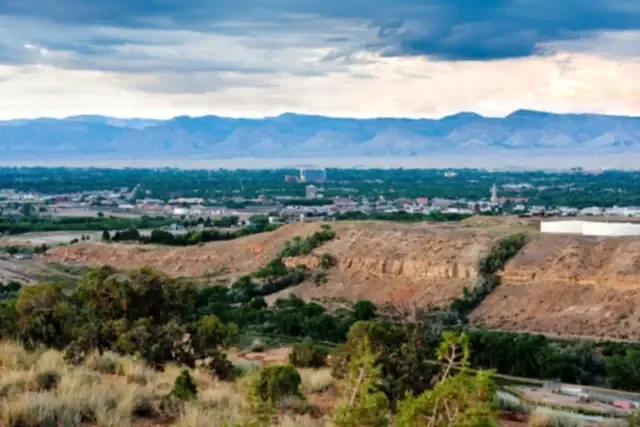
Grand Junction is the largest city on Colorado's Western Slope, sitting at about 4,600 feet where the Gunnison River meets the Colorado in the Grand Valley. It's warmer and drier than the Front Range, and its drain problems follow its irrigation ditches, river cottonwoods and salty clay soil.
Answered 24/7
Including holidays and storms
Licensed local plumbers
Licensed in Colorado
Winter-ready
Frozen lines and thaw calls
Price ranges up front
Know the range before they come
Grand Junction homes and their sewer lines
The blocks around downtown and North Seventh Street hold homes from the early 1900s, many with original clay sewer laterals running to alley or street mains. A large share of the city's housing went up during the uranium boom of the 1950s and the energy boom of the late 1970s, so ranch homes with cast iron under the slab and clay or early plastic laterals outside are everywhere from the Redlands to Orchard Mesa.
Since the 1990s, growth has pushed north toward the airport and east toward Clifton, and those subdivisions run PVC from the house to the main. Their trouble tends to be what goes down the drain, not the pipe itself.
Most of the urban valley drains to the Persigo Wastewater Treatment Plant, which the City of Grand Junction operates under a long-standing agreement with Mesa County. A few areas are served by separate sanitation districts, and the line from your house to the main is the owner's responsibility either way.
Grand Junction drain problems
Roots are the big one. Cottonwoods, Siberian elms and mulberries grow fast on irrigated lots and find every leaking clay joint. Summer irrigation raises the water table in parts of the valley, which can push groundwater and silt into cracked laterals. Kitchen grease, wipes and the occasional frozen line in a January cold snap round out the calls.
What drain work usually costs in Grand Junction
| Job | Typical range |
|---|---|
| Kitchen, bath or laundry line cleared | $125–$300 |
| Main line cleared from a cleanout | $200–$500 |
| Root cutting in a clay lateral | $250–$650 |
| Sewer camera inspection | $150–$400 |
| Hydro jetting a silted or greasy line | $350–$900 |
Irrigation water and the Grand Valley water table
Grand Junction runs on irrigation. From spring into fall, canals and laterals carry Colorado River water across the valley to yards, parks and fields, and in lower parts of the city that water raises the shallow groundwater. A cracked or separated clay lateral that seems fine in March can start taking in water and silt by June. Plumbers working the valley see more main line calls in irrigation season for exactly that reason.
If your backups line up with the irrigation schedule, mention it on the call. It points toward a lateral that's letting groundwater in, and a camera inspection is the quickest way to find where.
Neighborhood by neighborhood
The North Seventh Street area and the blocks around downtown have the oldest pipe in the city, often clay laterals under mature street trees. Orchard Mesa, south of the river, mixes older homes with newer ones and has its own pockets of root trouble near the cottonwoods along the Gunnison. The Redlands, west of the river toward the monument, is mostly 1970s and newer, with lots that slope toward the river and long laterals. Homes north of Patterson Road and out toward the airport are mostly newer construction with PVC lines.
Salty clay and alkaline soil
Much of the Grand Valley sits on clay weathered from Mancos shale. It's alkaline, salty and expansive, swelling when irrigation soaks it and shrinking in dry spells. Over decades that movement works on old pipe joints, especially where a clay lateral connects to the cast iron leaving the house. Salts in the soil also attack old cast iron from the outside. When a camera shows heavy scaling or a soft, flaking pipe bottom under an older Grand Junction slab, the soil has had a hand in it.
Cottonwoods, elms and mulberries
Shade is precious in a desert valley, and older Grand Junction neighborhoods grew it with fast trees: cottonwoods near the rivers and ditches, Siberian elms along alleys, mulberries in back yards. All of them have aggressive roots that chase water. Once roots get into a clay joint, they fill the pipe with a mat that catches paper and grease. A cable machine with a cutting head clears the line, and many owners schedule root cutting every year or two after that.
When a Grand Junction main line backs up
- 01
Stop using water
No laundry, showers or dishwashing until the line is open.
- 02
Find the cleanout
Older homes often have one near the foundation or in the yard; newer ones by the front of the house.
- 03
Note the timing
Did it start after irrigation water turned on, or after a holiday crowd?
- 04
Ask for a camera
After the line is cleared, a camera shows roots, breaks or a sag.
Warning signs in Grand Junction homes
- Water at a basement or laundry floor drain
- Toilets that bubble when a tub drains
- Sewer smell in the yard near the lateral
- A soggy spot in a dry part of the yard
- Drains that slow every summer
Heat, cold and the occasional freeze
Summers here regularly reach the high 90s, and winters are milder than in the mountains. Still, cold air settles in the valley on clear January nights, and a lot of Grand Junction plumbing was built with mild winters in mind. Drain lines in unheated garages, under additions with shallow crawlspaces and in outdoor kitchen sinks can freeze. If a drain stops during a cold snap and starts again on a warm afternoon, frozen pipe is the likely cause.
Getting the most from a Grand Junction drain call
Tell the plumber the age of the house, whether it has a basement or a slab, and whether the lateral runs to an alley or the street. Mention big trees near the line and whether the problem tracks the irrigation season. That information narrows down the cause before the cleanout cap even comes off, which often saves time on the bill.
Uranium-era ranch homes
Grand Junction grew fast in the 1950s, when the city was a center of the uranium business, and many ranch homes from that decade still line streets east of downtown and on Orchard Mesa. Those homes have been through sixty-plus years of owners, remodels, additions and spot repairs, so two houses of the same age on the same block can have very different laterals underneath. One may have a replaced PVC line, the next its original clay with roots at every joint. Don't assume your neighbor's camera report describes your line.
Rentals near Colorado Mesa University
The blocks around Colorado Mesa University hold a lot of student rentals, often older homes with several tenants each. More people on one old lateral means more grease, hair and wipes, and tenants rarely notice early warning signs like a gurgling toilet. Landlords with houses in that area do well to scope laterals between leases and to schedule root cutting before the fall semester rather than waiting for an emergency in October.
Call if you notice
- Roots in a clay lateral under an old elm or cottonwood
- Backups that get worse once irrigation water starts
- Slow drains in a 1950s ranch with cast iron under the slab
- Silt or sand pulled from the main line
- Grease buildup in a busy kitchen line
Grand Junction drain questions
Who maintains the sewer main in Grand Junction?+
The city or your sanitation district maintains the public main. The lateral from your house to that main belongs to you.
Why does my sewer back up more in summer?+
Irrigation raises groundwater and roots grow fastest in summer, so a cracked lateral gets worse from May through September.
Are roots a big problem in Grand Junction?+
Yes. Irrigated yards and old shade trees send roots into clay laterals across the older parts of the city.