Colorado · typical $125–$300
Kitchen sink clogs
Kitchen lines clog differently from bathroom drains. It's rarely one object; it's months of grease, starch and food particles coating the pipe until the opening closes. That also makes kitchen clogs the most likely to come back if the line is only poked through rather than properly cleaned.
Need kitchen sink clog help?
Answered 24/7
Including holidays and storms
Licensed local plumbers
Licensed in Colorado
Winter-ready
Frozen lines and thaw calls
Price ranges up front
Know the range before they come
Sounds like this?
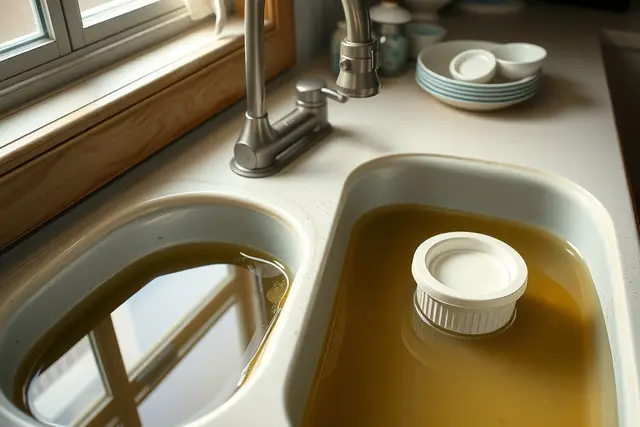
- Both basins of a double sink full of standing water
- Water coming up in one side when the disposal runs
- The dishwasher leaving water in its tub or backing up into the sink
- A sour or rotten smell from the drain
- Gurgling after the sink empties
Why kitchen drains clog
Fat and oil go down warm and liquid, then cool and stick to the pipe walls a few feet downstream, often where the line runs through an exterior wall or a cold crawlspace. Starches like rice and pasta swell in the trap. Coffee grounds and eggshells add grit that binds it all together. In older Colorado homes the kitchen line is often galvanized steel, which is rough inside and catches buildup faster than plastic.
First checks you can do
- 01
Check the disposal
If the disposal hums but doesn't spin, turn it off at the switch and use the hex key in the bottom of the unit to free it. Press the red reset button.
- 02
Plunge with one side sealed
On a double sink, hold a wet rag or stopper tightly over the second drain, then plunge. Without sealing it, the pressure just escapes.
- 03
Check the dishwasher's air gap
If you have a small chrome cap on the sink deck, pull it off and clear any debris. A blocked air gap backs the dishwasher up into the sink.
- 04
Stop if it doesn't move
Don't stack chemical drain cleaner on top of standing water. Call a plumber; you'll save yourself a burn and them a hazard.
Cabling vs. jetting a kitchen line
A drain cable punches a hole through the grease and gets you draining again. That's often enough. But if the kitchen line has clogged two or three times in a year, the pipe walls are coated, and hydro jetting scours the grease off instead of tunneling through it. Ask the plumber what came out on the cable before deciding.
Garbage disposals: what they can and can't handle
Run cold water before, during and for about 30 seconds after using the disposal so scraps clear the trap and the kitchen line. Cold water keeps any fat solid so it moves along instead of coating the pipe.
| Fine in moderation | Keep out of the disposal |
|---|---|
| Soft food scraps | Grease, oil and fat |
| Small amounts of fruit and vegetable waste | Coffee grounds |
| Citrus peels in small pieces | Eggshells |
| Cooked leftovers in small amounts | Rice, pasta and bread in quantity |
| Ice cubes (they help clean the chamber) | Fibrous scraps: celery, onion skins, corn husks |
Dishwashers and kitchen clogs
Most dishwashers drain into the disposal or the sink tailpiece. A clog anywhere in the kitchen line can back water into the dishwasher, leaving standing water in the tub after a cycle. If the dishwasher is the only thing affected, the problem may be its own filter or drain hose rather than the house drain; cleaning the filter at the bottom of the tub is a two-minute check worth doing first.
Newer homes often have a high loop in the dishwasher drain hose instead of a countertop air gap. Both keep dirty sink water from flowing back into the dishwasher, and both can collect debris that slows draining.
Older Colorado kitchens
In pre-1970 Denver, Pueblo and Greeley homes, the kitchen line is often galvanized steel. Steel rusts inside, roughening the walls so grease grips more easily, and the opening gradually narrows. A kitchen line that clogs a few times a year in an older home may be near the end of its life. A plumber can scope it from the cleanout under the sink and tell you whether jetting will help or whether that section should be replaced with PVC.
In newer homes the kitchen line is usually PVC, and repeated clogs almost always come from what goes down the drain.
A simple monthly routine
- 01
Wipe pans before washing
Paper towel the grease into the trash.
- 02
Flush with hot water
Once a week, run hot tap water for a couple of minutes after the dishes are done.
- 03
Clean the disposal
Grind a handful of ice cubes and a few citrus pieces to scour the chamber.
- 04
Watch for early signs
Gurgling, slow draining or a sour smell mean buildup is starting; deal with it before it becomes a full clog.
Clogs that come back after the holidays
Kitchen lines take more abuse around Thanksgiving and the winter holidays than at any other time of year: roasting fat, potato peels in the disposal and extra loads in the dishwasher. Plumbers see a wave of kitchen and main line clogs in the days afterward. Pour cooled fat into a can, put peels in the trash and run the dishwasher full rather than half-full to cut the risk.
When the clog is past the sink
If both basins are full but the bathroom sinks and toilets drain normally, the clog is in the kitchen branch line, somewhere between the sink and where that line joins the main. In single-story Colorado ranches, that branch often runs under the floor or through a crawlspace; in two-story homes it drops through a wall to the basement. A plumber usually clears it from the cleanout under the sink or from a cleanout on the branch in the basement.
If the kitchen sink backs up when the washing machine drains, or the basement floor drain gurgles at the same time, the problem has moved downstream into the main line. That's a different job, and it's worth mentioning when you call so the plumber brings the larger machine.
Kitchen islands and long runs
A sink in a kitchen island drains through a line that runs under the floor to reach the main stack, often with a special loop vent instead of a standard vent through the roof. Those longer, flatter runs collect grease more easily than a sink on an outside wall. If your island sink clogs more often than you'd expect, mention the island when you call; it changes where the plumber will access the line.
Common questions
Why are both sides of my kitchen sink clogged?+
Both basins share one drain below the sink, so a clog past the point where they join stops both. The disposal side often fills first.
Is it the disposal or the drain?+
If the disposal motor runs and the drain is still blocked, the clog is in the line. If the disposal hums without spinning, the disposal itself is jammed.
Can a clogged kitchen sink affect the dishwasher?+
Yes. Most dishwashers drain into the sink line or disposal, so a kitchen clog often shows up as water left in the dishwasher.
How do I keep it from happening again?+
Wipe greasy pans with a paper towel before washing, run plenty of cold water with the disposal, and keep coffee grounds and eggshells in the trash.