Denver · typical $125–$300
Clogged kitchen sink help in Denver
A Denver kitchen sink clog is rarely just a plug in the trap. In a 1920s bungalow or a postwar ranch, the kitchen drain often runs a long way before it reaches the main stack, and years of grease and food starch coat the inside of that pipe until one Thanksgiving or one big batch of pasta water closes it off.
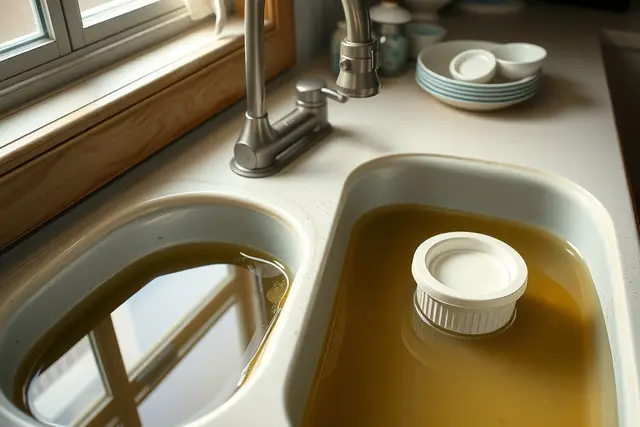
Kitchen sink clog in Denver?
Answered 24/7
Including holidays and storms
Licensed local plumbers
Licensed in Colorado
Winter-ready
Frozen lines and thaw calls
Price ranges up front
Know the range before they come
Why Denver kitchen drains clog where they do
In many older Denver houses the kitchen sits at the back, the main stack sits near the front or the middle, and the kitchen branch runs across the basement ceiling or under the floor to meet it. Galvanized steel was common for those branches through the middle of the last century. Galvanized pipe rusts from the inside and narrows, so a line that started at 1.5 inches can be down to the width of a finger after seventy years. Grease catches on that rough wall first.
Newer Denver construction, from Stapleton's redevelopment (now Central Park) to infill duplexes in Sloan's Lake and Berkeley, uses PVC throughout. Those kitchen clogs are usually closer to the sink: the trap, the disposal outlet or a dishwasher hose.
Soft water, so the problem is grease
Denver Water draws mostly from mountain snowmelt, and the city's water is soft compared with many Colorado towns. That means heavy mineral scale is not the usual story in a Denver kitchen drain. Grease, starch and coffee grounds are. Fat that leaves the sink warm cools and hardens on the pipe wall within a few feet, especially in a branch running through a cold basement or crawlspace in January.
Denver kitchen sink clog costs
| Job | Typical range |
|---|---|
| Clearing a clogged trap or disposal outlet | $125–$200 |
| Snaking the kitchen branch line to the stack | $150–$300 |
| Clearing an old galvanized branch through a basement cleanout | $200–$350 |
| Double sink backing up into the other bowl | $125–$250 |
| Camera look down a kitchen line that keeps clogging | $150–$300 |
Bungalows, Tudors and the long kitchen run
In neighborhoods like Washington Park, Congress Park, Platt Park and the Highlands, the classic Denver bungalow has its kitchen at the back of the house. The drain drops into the basement and travels forward along the joists to the main stack. That long, nearly flat run is where grease settles. When a plumber clears one of these lines, the cable often comes back wrapped in gray, soapy sludge from twenty or more feet away, nowhere near the sink.
Remodeled kitchens over old pipe
Plenty of Denver kitchens have been remodeled with new cabinets, a new sink and a new disposal, while the pipe in the wall or basement ceiling is still original. The new fixtures work beautifully until the water reaches the old galvanized or cast iron branch. If your Denver kitchen was updated but the clogs keep coming back every few months, ask the plumber to look at where the new PVC meets the old pipe. Replacing a few feet of narrowed branch can end the cycle.
Holiday clogs
The busiest week for kitchen drain calls is the one around Thanksgiving, and Denver is no exception. Turkey fat, potato peels, stuffing and gravy all go down the same sink in one afternoon, often into a disposal that never sees that much in a month. Peels and starch swell into paste; fat sets up in the cold basement branch. Scrape plates into the trash, pour cooled fat into a can, and run the disposal in small batches with lots of cold water.
Denver kitchen sink symptoms and what they point to
- One Denver sink bowl slow, the other fine: the trap or disposal on that side
- Both bowls slow and gurgling: the shared drain past the trap
- Water backing up into the sink when the dishwasher drains: a clogged branch or a kinked dishwasher hose
- Kitchen water appearing at a basement floor drain: a blockage further down, near the main
- Sink drains fine but smells: food sitting in the disposal or a dry, loose trap
What not to pour down a Denver sink
Drain cleaners sold at the hardware store are hard on old galvanized and cast iron pipe and rarely reach a clog thirty feet away. If one has already gone in and didn't work, tell the plumber before they open anything, since that water is caustic. Pasta water, rice, coffee grounds, eggshells and fibrous scraps like celery and onion skins are the usual culprits plumbers find in Denver kitchen lines, along with grease.
The dishwasher connection
A dishwasher drains through a hose into the disposal or a tailpiece under the sink. Denver building practice calls for an air gap or a high loop in that hose so dirty sink water can't siphon back into the dishwasher. If dirty water sits in the bottom of your dishwasher after a cycle, the hose may be clogged where it joins the disposal, which is a quick fix when the disposal itself is clear.
Condos and older apartment buildings
In Capitol Hill and Cheesman Park, many people live in older brick apartment and condo buildings where several kitchens stack above one another and share a single drain riser. A clog in that shared riser shows up in the lowest kitchen first. If your sink backs up when the neighbor upstairs runs their dishwasher, the blockage is in the common line, and the building's management or HOA usually needs to arrange the work.
Getting ready for the plumber
Empty the cabinet under the sink and set out a bucket and towels. If the house has an unfinished basement, clear a path to where the kitchen line drops through the floor and note any cleanout plugs you can see along it. Knowing whether the disposal hums, whether the dishwasher ran recently and whether anything was poured down the drain helps the plumber pick the right approach on the first try.
Garbage disposals in older Denver houses
A disposal grinds food small, but it doesn't make it disappear. In a Denver house where the kitchen branch is old galvanized pipe with little slope, ground food settles in the same low spots grease does and builds a layer that hardens over months. If you added a disposal to an older kitchen, run cold water for a good fifteen seconds after the grinding stops so the slurry is pushed all the way to the stack, and keep starchy and stringy scraps in the compost or trash.
Common questions
How much does it cost to unclog a kitchen sink in Denver?+
Most kitchen sink calls run $125 to $300. A clog deep in an old galvanized branch, or one that needs a basement cleanout opened, sits at the upper end.
Why does my Denver kitchen sink back up into the other side?+
Both bowls share one trap and drain. If the blockage is past the point where they join, water from one side rises in the other.
Is it safe to use a disposal in Denver?+
Yes, disposals are common in Denver homes. Run plenty of cold water, keep grease, rice, pasta and coffee grounds out, and they cause few problems.