Weld County · Northern Colorado
Drain Cleaning in Roggen, CO
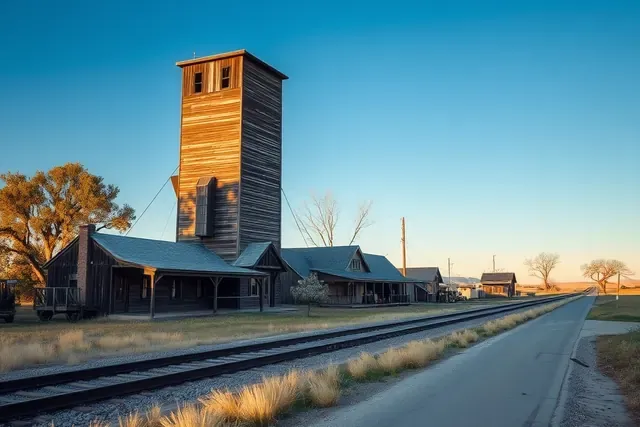
Roggen is an unincorporated Weld County community on the old Burlington line and I-76, about 47 miles northeast of Denver between Keenesburg and Wiggins. It began in 1882 as a railroad stop called Blair, took its present name when the post office opened in 1883, and still has its grain elevator, its post office and its own telephone cooperative.
Clogged drain in Roggen?
Answered 24/7
Including holidays and storms
Licensed local plumbers
Licensed in Colorado
Winter-ready
Frozen lines and thaw calls
Price ranges up front
Know the range before they come
Roggen homes and their sewer lines
Roggen homes are a scattering of early 1900s frame houses near the elevator and the old townsite, farmhouses on the surrounding sections and manufactured homes on acreage.
There is no public sewer in Roggen. Every house drains to its own septic system, and most rely on private wells.
Older Roggen farmhouses often have cast iron inside and clay or early plastic out to the tank, sometimes with additions plumbed decades after the original house.
Roggen drain problems
Roggen drain calls are septic calls first. Long runs from farmhouses to tanks, old pipe in houses built before the Second World War, windbreak trees planted beside the house and open-plains cold that drives frost deep all show up in the lines here.
What drain work usually costs in Roggen
| Job | Typical range |
|---|---|
| Farmhouse sink, tub or toilet clog | $125–$300 |
| House line cleared out to the septic tank | $200–$550 |
| Root cutting near a windbreak | $250–$600 |
| Camera inspection and tank locate | $150–$400 |
| Thawing a frozen line to the tank | $200–$600 |
From Blair to Roggen
The Burlington and Missouri River Railroad built a station here in 1882 on its line between Hudson and Fort Morgan and called it Blair. Because the same railroad already had a Blair in Nebraska, the name was changed, and the post office opened as Roggen in 1883, honoring a Nebraska state official. Ranching came first: after the Great Blizzard of 1885, Roggen-area ranchers found only a small fraction of their cattle alive at the spring roundup.
The Last Springs Ranch Company filed the town plat in 1908. From 1917 to 1975 Roggen had a sugar beet dump, and its grain elevator is still the landmark you see from I-76. The Roggen Telephone Cooperative, headquartered on Front Street, has served the surrounding farms for generations.
Every house on its own septic system
Roggen has no town government and no public sewer. Each house, from the older homes near the elevator to the farmhouses a few miles out, drains to a private septic tank and leach field. That makes the homeowner responsible for everything from the toilet to the far end of the field. When a Roggen drain backs up, the first job is to work out where: one slow fixture points to a branch line inside the house, every fixture slow at once points to the main line or the tank, and water surfacing in the yard points to the field.
Long runs from old farmhouses
Farmhouses around Roggen were often built well back from the road, and the tank was set wherever the ground suited it, sometimes a long way from the house. A long run of four-inch pipe has more joints, more chances for a sag and more places for paper and grease to settle. If the house has had several additions, a newer bathroom may tie into the old line at an awkward angle. A camera run from the cleanout shows the full route, the condition of each joint and exactly where the tank sits, which saves digging in the wrong place.
Windbreaks and roots
On the open plains, homeowners plant rows of trees on the north and west sides of the house to break the wind. Those trees are welcome in a January blow, but their roots go looking for water, and a septic line with a loose joint is an easy find. Roots usually show up first as a slow drain that gets a little worse each summer. Cutting the roots restores flow, and a camera shows whether the joint can be sealed or the section should be replaced with solid pipe.
Frost on the high plains
Roggen sits on open ground with nothing between it and the wind, and a week of subzero nights drives frost deep into bare soil. A septic line that was buried shallow, or that runs under a driveway where snow is plowed away, can freeze solid. The line to the tank freezes most often when a house sits unused for a few days or when a slow drip from a fixture leaves a thin stream of water to turn to ice. If every drain in a Roggen house stops on a bitterly cold morning, suspect ice before roots.
When a Roggen drain backs up
- 01
Stop the water
Hold off on laundry, dishes and showers so the tank and line don't overflow into the house.
- 02
Find the cleanout
Look along the foundation, in the basement or utility room, or in the yard on the tank side.
- 03
Check the tank area
Note any odor, standing water or soft ground over the tank or field.
- 04
Mention the weather
A sudden stop after a frigid night points to ice; a slow decline points to roots or a full tank.
Roggen warning signs
- Gurgling in the toilet when the washer drains
- Roots on the cable after a line is cleared
- Lush grass or wet ground over the leach field
- Every fixture slow at once
- A sewage smell outside near the tank
Harvest season and full houses
Busy times on a Roggen farm can mean more people in the house: family helping at harvest, seasonal crews or guests during the holidays. A septic system sized for a couple can struggle when the house is full, especially if the tank is overdue for pumping. If you know a busy stretch is coming, have the tank checked first, spread out laundry and keep grease out of the kitchen drain.
Keeping the system healthy
Most Roggen households should have the tank pumped every three to five years. Keep a record of each pumping and of where the lid and cleanout are, since snow and grass hide them quickly. Avoid planting new trees close to the line or field, keep vehicles and livestock off the field, and fix running toilets promptly, since a constant trickle adds a surprising amount of water to the system.
What changes the price in Roggen
A single fixture clog is quick. Long lines, roots, thawing and locating a buried tank add time. Plumbers come out from Keenesburg, Hudson, Brighton or Fort Morgan, so travel adds a little. When you call, describe the house, how far the tank is from it and what you've noticed, and ask what a Roggen visit is likely to run.
Call if you notice
- Roots from a farmhouse windbreak in a Roggen septic line
- Drains slowing as the tank fills in a busy harvest season
- A frozen line to the tank after a week of subzero wind
- Rusting cast iron under an old Roggen kitchen
- Soggy ground or odor over the leach field
Roggen drain questions
Is Roggen on a sewer system?+
No. Homes in and around Roggen use private septic systems, so a backup can be in the house line, the tank or the field.
Where do plumbers serving Roggen come from?+
Most come from Keenesburg, Hudson, Brighton or Fort Morgan, all reachable on I-76.
How often should a Roggen septic tank be pumped?+
Every three to five years for a typical household, sooner if many people live in the house or the tank is small.