Douglas County · Denver Metro
Drain Cleaning in Louviers, CO
Louviers is the old DuPont company village beside Plum Creek and US 85 in Douglas County, south of Chatfield. DuPont began building a dynamite plant here in 1906, named the town after its Louviers estate in Delaware, and put up most of the houses in the 1910s, along with the water and sewer lines that still serve them.
Clogged drain in Louviers?
Answered 24/7
Including holidays and storms
Licensed local plumbers
Licensed in Colorado
Winter-ready
Frozen lines and thaw calls
Price ranges up front
Know the range before they come
Louviers homes and their sewer lines
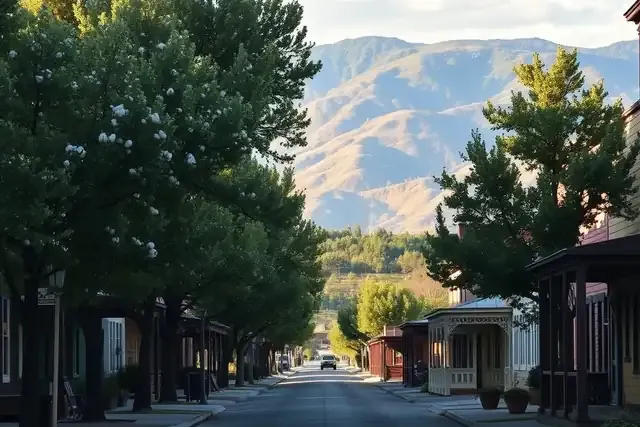
Most Louviers homes are the original company houses from the 1910s: small frame cottages and bungalows on narrow lots, built to a handful of plans and laid out along shaded lanes.
DuPont built the village's water and sewer collection lines itself. When the company sold the houses to residents in the early 1960s, the infrastructure passed to public ownership, and today the Louviers Water and Sanitation District runs it.
Because the houses are more than a century old, their service lines have usually been repaired in pieces, so one lateral can mix clay, cast iron and newer plastic.
Louviers drain problems
Louviers drain calls mostly come back to age. The laterals under the company houses were laid before modern pipe, the shade trees the company planted have had a century to send roots into them, and cast iron drains inside the homes have scaled down to a fraction of their original width. Plum Creek's bottomland keeps the soil around the lower lanes damp, which makes roots grow faster.
What drain work usually costs in Louviers
| Job | Typical range |
|---|---|
| Sink, tub or toilet clog cleared | $125–$300 |
| Main line cleared from a cleanout | $200–$500 |
| Root cutting in a century-old lateral | $250–$650 |
| Sewer camera inspection | $150–$400 |
| Hydro jetting a scaled or greasy line | $350–$900 |
A village built by a powder company
When DuPont started its dynamite works on the Plum Creek bottom in 1906, the site was called Toluca. The company renamed it Louviers in 1907 and spent the next few years building homes, a clubhouse and the village lanes for the people who ran the plant. Dynamite production carried on here until 1971. The company houses outlasted the plant, and they still make up most of the village today, which is why Louviers looks so different from the subdivisions going up a few miles north along Santa Fe Drive.
For drains, that history matters in a very practical way: almost every Louviers home has plumbing that started life more than a hundred years ago, and the parts that have been replaced were replaced one emergency at a time.
Pipe the company laid
The Louviers Water and Sanitation District says DuPont built the village's original water and sewer collection lines, and that the exact construction dates were never well recorded. The oldest drawing the district has is a 1960 plat, made around the time DuPont sold the homes to the families living in them and handed the infrastructure to Douglas County. In practice, that means nobody can tell you from paperwork what is under your yard. A camera run from the cleanout out to the district main is the only reliable map, and it is worth saving the video for the next owner.
Roots under the lanes
DuPont planted shade trees along the lanes, and a century later they are huge. Their roots spread well beyond the canopy and find the tiny gaps at old clay joints, then fill the pipe with fine hair roots that catch toilet paper. A Louviers lateral that backs up every spring or every fall, on a regular schedule, is almost always a root problem. Cutting with a root head restores flow; sealing or replacing the joint the roots use is what stops the cycle.
Cast iron inside the cottages
Inside the houses, the original drains were usually cast iron. Over a hundred years, iron drains build up rough scale on the inside walls, so a two-inch kitchen line may have only an inch of clear opening left. Grease and food scraps stick to that rough surface quickly. Hydro jetting scours the scale and grease off far better than a cable, and a camera shows whether the pipe walls are still sound enough to keep in service or have rusted through at the bottom.
Plum Creek and the 1965 flood
Louviers sits beside Plum Creek, which flooded catastrophically in June 1965 when heavy storms over its basin sent a wall of water down toward the South Platte. Ground near the creek stays damp, and groundwater around the lower lanes rises in wet springs. An older lateral with open joints can let that water and fine silt in, which shows up as drains that slow down after a wet season and recover once things dry out.
When a Louviers home backs up
- 01
Stop running water
Hold off on showers, laundry and the dishwasher so you don't add to the backup.
- 02
Look at the lowest drain
In a cottage with a basement or crawlspace, the lowest fixture shows a main line clog first.
- 03
Find the cleanout
Older village homes may have one in the basement, in the crawlspace or outside near the foundation; some have none.
- 04
Tell the plumber the age of the house
Mentioning that it is an original company house helps them bring root heads and a camera on the first trip.
Louviers warning signs
- A toilet bubbling when the tub drains
- Laundry water rising at the basement floor drain
- Kitchen sink slow again weeks after it was cleared
- A sewer smell in the crawlspace
- A soft, sunken patch in the yard over the lateral
Adding a cleanout
Many Louviers homes were built before outside cleanouts were standard. Without one, a plumber has to pull a toilet or work through a small basement opening, which takes longer. If your line needs clearing more than once, ask about installing an outdoor cleanout near the foundation. It makes every future visit faster and lets you schedule root cutting without taking a bathroom apart.
What changes the price in Louviers
A single clogged fixture is quick. Prices climb when the lateral is root-packed, when the only access is through a cramped crawlspace, or when the cast iron needs jetting rather than a simple cable. Asking for a camera inspection on the first main line call costs a little more up front, but in a village this old it usually saves a second visit.
Living with the radium fix
Louviers residents spent several years under a state enforcement order after tests from late 2018 into 2019 found combined radium in the drinking water above the federal limit. The district built an ion-exchange treatment plant, with construction starting in June 2024 and most of the cost covered by Douglas County federal recovery funds and state small-community grants. That work concerns drinking water, not drains, but it is a reminder that the village's utilities are small, old and run on a tight budget, so the service line on your side of the main is worth looking after yourself.
Call if you notice
- Roots from old village shade trees in a clay lateral
- Toilet gurgling when the tub drains in a 1910s cottage
- Basement or crawlspace drain backing up first
- Scaled cast iron under the kitchen sink
- Slow drains after a wet spring along Plum Creek
Louviers drain questions
Who runs sewer service in Louviers?+
The Louviers Water and Sanitation District. It looks after the shared mains; the line from your house to the main is the owner's.
Are Louviers sewer lines really from the DuPont era?+
Many are. The district notes DuPont built the original collection system, and the earliest drawing of it dates to 1960, so a camera inspection is the best way to see what is under your yard.
Why do roots keep coming back in my Louviers line?+
Old joints leak a little moisture and the mature trees around the village find it. Cutting clears the pipe, but the joint stays open until it is sealed or replaced.