Colorado · typical $200–$600
Main sewer line clogs & backups
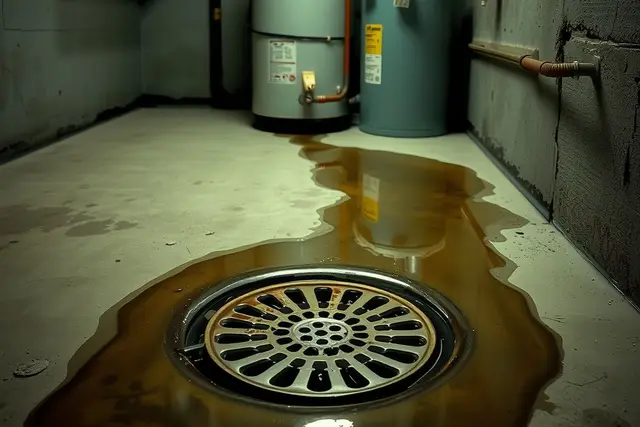
When several drains back up at once, or water rises out of the lowest drain in the house, the blockage is in the main sewer line: the single pipe that carries everything from the house to the city main. That needs a large cable machine from a cleanout, and it shouldn't wait.
Need main sewer line clog help?
Answered 24/7
Including holidays and storms
Licensed local plumbers
Licensed in Colorado
Winter-ready
Frozen lines and thaw calls
Price ranges up front
Know the range before they come
Sounds like this?
- Water or sewage coming up through a basement floor drain
- Several fixtures slow or backing up at the same time
- The toilet bubbling when the washing machine drains
- Water rising in the tub when a toilet is flushed
- A soggy, smelly patch of lawn over the sewer line
What to do right now
- Stop using water anywhere in the house: no flushing, laundry, dishwasher or showers. Everything you send down ends up in the basement.
- Keep people and pets away from any sewage on the floor. Turn off power to nearby outlets or appliances if water is near them.
- Find the sewer cleanout if you can. It's usually a 3 or 4 inch capped pipe in the basement near the front wall, or outside near the foundation. Don't open it if the line is full; it will spill.
- Call. Main line backups get worse with every fixture someone uses.
How a main line is cleared
- 01
Access the line
The plumber opens the main cleanout. If the house has none, they pull the lowest toilet and run the cable through the flange.
- 02
Run a sectional or drum machine
A 1/2 to 3/4 inch cable with a cutting head is run toward the street until the line opens and drains.
- 03
Confirm full flow
Water is run from upstairs fixtures to make sure the line drains at full speed, not just a trickle through a partial hole.
- 04
Look inside
A camera inspection after clearing shows whether it was a one-off (wipes, grease) or a structural problem like roots, a sag or a broken pipe.
Why Colorado main lines clog
Many homes built before the 1970s along the Front Range have vitrified clay sewer laterals. Clay pipe comes in short sections, and every joint is a place for roots to get in. Cottonwoods, silver maples and elms, all common street trees here, send roots toward those joints looking for water. Expansive clay soils that swell and shrink with the seasons can also shift pipes and open joints over time.
In most Front Range cities the homeowner is responsible for the sewer lateral from the house to the city main, so problems along it are a private repair. If a line clogs repeatedly, the camera footage is what tells you whether it needs root cutting, jetting or a repair.
What a main line clearing usually costs, broken down
| Part of the job | Typical cost in Colorado | Notes |
|---|---|---|
| Service call / trip | Often included, sometimes $75–$150 | Nights and holidays cost more |
| Clearing from an accessible cleanout | $200–$600 | Most common scenario |
| Pulling a toilet for access | Adds $100–$200 | Includes a new wax ring |
| Camera inspection afterward | $150–$400 | Often discounted as an add-on |
| Hydro jetting if needed | $350–$900 | For grease, scale or root regrowth |
Cleaning up after a backup
Sewage contains bacteria, so cleanup deserves more care than a clean-water leak. For a small amount on a concrete floor, wear gloves and boots, remove solids, then clean and disinfect the area and let it dry with the windows open. For anything that soaked into carpet, drywall or furniture, or more than a small area, a water damage restoration company is the safer choice; porous materials that absorbed sewage are usually removed rather than cleaned.
Photograph everything before you clean if you plan to talk to your insurer, and keep the plumber's invoice showing what caused the backup.
Preventing the next backup
- Never flush wipes, even ones labeled flushable, or paper towels, feminine products or dental floss.
- Keep grease out of kitchen drains; it travels to the main line and hardens there.
- If roots were the cause, schedule cutting before the season your line usually backs up.
- Ask about a backwater valve if your basement has flooded from the main before.
- Know where your cleanout is and keep it clear of storage, landscaping and drywall.
When clearing isn't enough
Some lines can't be fixed with a cable. A collapsed section of clay or Orangeburg pipe, a badly offset joint or a deep belly will keep catching waste no matter how often the line is cleaned. A camera inspection is how you find out. Repair options range from a spot repair at one joint, to pipe lining that seals the inside of the old pipe without digging a trench, to full replacement of the lateral. Ask for the video and a written estimate before deciding, and consider a second opinion on large jobs.
Which Colorado homes back up most
Main line backups cluster in a few kinds of houses: pre-1960 homes with clay laterals under large trees, mid-century homes with Orangeburg fiber pipe, and any house where the basement sits low relative to the city main. Denver's older neighborhoods, central Pueblo, Old Town Fort Collins, central Greeley and the older parts of Colorado Springs and Littleton all fit that profile. Newer suburbs back up too, but usually because of wipes, grease or a line that settled after construction rather than a failing pipe.
If your home fits the first profile and has backed up once, it will likely happen again. That's when a camera inspection and a plan, whether yearly root cutting, lining or replacement, saves money compared with waiting for the next emergency.
Questions to ask before the plumber starts
- Where will you access the line, and will you need to pull a toilet?
- Is the price for clearing only, or does it include a camera look?
- If the first cable run doesn't clear it, what happens next and what does that cost?
- Will you show me what comes out on the cable?
- If you find a broken section, will you give me the video and a written estimate?
Common questions
How do I know if it's the main sewer line?+
If more than one fixture is affected, and especially if water comes up in the lowest drain in the house, it's almost always the main line rather than a single branch.
Is a sewer backup an emergency?+
Yes. Sewage is a health hazard and the backup gets worse every time water is used. Stop using water and call right away.
Who is responsible for the sewer line, me or the city?+
In most Colorado cities the homeowner owns the lateral from the house to the main. Check with your city's utility if the problem appears to be in the street.
Does homeowners insurance cover sewer backups?+
Standard policies often exclude sewer backup unless you've added a sewer backup rider. Check your policy before cleanup starts.
Will it happen again?+
If the cause was wipes or grease, maybe not. If roots or a sag caused it, it usually comes back unless the cause is treated. A camera inspection answers that.