Lakewood · typical $200–$600
Main sewer line clog and backup help in Lakewood
When a Lakewood toilet gurgles while the shower runs, the tub fills during a flush, or water rises through the lowest drain in the house, the blockage is almost always in the main line: the one pipe that carries everything from the house out to the sewer under the street.
Main sewer line clog in Lakewood?
Answered 24/7
Including holidays and storms
Licensed local plumbers
Licensed in Colorado
Winter-ready
Frozen lines and thaw calls
Price ranges up front
Know the range before they come
Lakewood laterals from the 1950s to the 1970s
The bulk of Lakewood's houses were built in the quarter century before the city incorporated in 1969, from the brick ranches around Lakewood Gulch and Eiber to the tri-levels of Green Mountain and Bear Valley. Their main lines are mostly vitrified clay outside the foundation, joined every few feet, with cast iron inside. Those clay joints are where roots get in and where a heavy load of paper hangs up.
Mature trees are part of the problem. Lakewood planted generously in its early subdivisions, and sixty-year-old elms, ash and silver maples now shade many of those front yards directly over the lateral.
Is it your line or the district main?
Lakewood's sewer service is split between the city's own utility and a group of special districts, so the agency on the other end of your lateral depends on your address. Whoever it is maintains the main. On a Lakewood lot, the pipe running from the foundation out to that main is the homeowner's to keep clear and repair. If the house next door is backing up too, call the provider first. If it's only your house, the clog is on your side and a plumber is the right call.
Lakewood main sewer line costs
| Job | Typical range |
|---|---|
| Clearing the main from an outdoor or basement cleanout | $200–$450 |
| Clearing the main through a pulled toilet | $300–$600 |
| Heavy root cutting in a clay lateral | $300–$600 |
| Camera inspection with the clearing | $100–$250 added |
| Installing a new cleanout for future access | Quoted on site |
Signs the Lakewood main is the problem
A single slow sink is a branch clog. The main line announces itself differently. Toilets bubble when the washer drains, the tub fills with gray water when someone flushes upstairs, or water appears around the lowest drain in the house during a shower. In a Lakewood tri-level, that lowest drain is usually in the bottom level beside the furnace; in a slab ranch, it's often the shower or tub on the ground floor. When two or more fixtures act up at once, stop running water and plan on a main line clearing.
Roots under older Lakewood yards
Clay laterals laid in the 1950s and 1960s were joined with mortar or early compression gaskets that loosen with age. Roots from the big trees planted in those front yards find the moisture at the joints and grow in as fine hairs, then thicken into a mat. A plumber clearing a Lakewood main often pulls back a cable wrapped in roots from somewhere between the house and the street. If roots keep coming back, a camera can show whether it's one bad joint worth repairing or the whole line.
Wipes, grease and the slow build
Not every Lakewood main line clog is roots. So-called flushable wipes don't break down the way toilet paper does, and they snag on the same rough clay joints and offsets that roots like. Grease from the kitchen coats the inside of the pipe and catches both. A main that clogs every winter around the holidays, with no roots on the cable, usually points to what's being flushed and poured rather than the pipe itself.
What the Lakewood plumber will want to know
- Which Lakewood fixtures backed up first and which are still working
- Where the cleanout is, if you know (a capped pipe near the front of the house or in the yard)
- Whether the line has been cleared before, and when
- If there is a big tree in the front yard near where the sewer runs to the street
- Which sewer provider serves your address, if you've looked it up
Cleanouts make every visit cheaper
Many Lakewood houses from the building boom were built without an outside cleanout, so the only way into the main is through a basement cleanout plug that's been painted over for decades or by pulling a toilet. Both add time and cost. If your main needs clearing more than once, ask about having a two-way cleanout installed outside near the foundation. It gives future plumbers direct access in both directions without coming inside.
Slopes, Green Mountain and long laterals
On the hillside streets around Green Mountain and in parts of south Lakewood, houses can sit well above or below the street, and some laterals run to a sewer main behind the house rather than in front. A lateral running steeply downhill rarely holds a clog, but its joints can separate as the slope moves. A lateral running uphill to a main can need a pump. A camera with a locating sonde tells the plumber exactly where the line goes before anyone guesses.
After the line is open
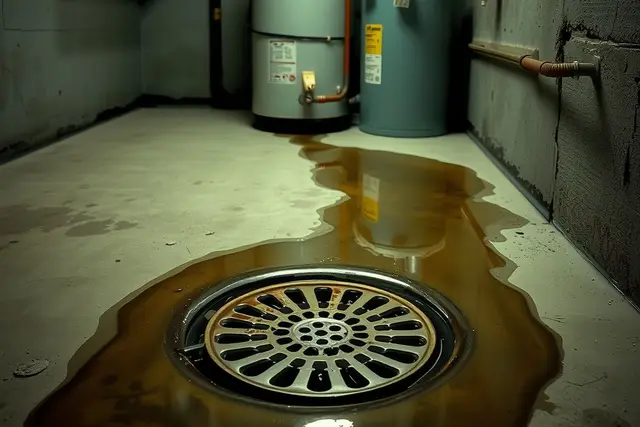
Once the main is flowing, run water at every fixture, flush each toilet, and run the washer through a drain cycle to make sure nothing else is held up. If water came out of the basement floor drain, clean and disinfect the area and dry it out quickly; wet carpet and drywall in a finished Lakewood basement should come out within a day or two to avoid mold. Keep the plumber's notes or video with your house records. If you sell, a buyer's sewer scope will find the same things.
Repairs when clearing isn't enough
If the camera shows a collapsed section, a large offset or Orangeburg pipe that's flattening, clearing becomes a stopgap. Options range from a spot repair at one bad joint, to lining the whole lateral from the inside, to replacing it with PVC. In Lakewood, where many laterals run under mature trees and established landscaping, lining is often worth pricing. Lakewood and the special districts may require permits and inspection for work at the tap, so the plumber doing the repair should handle that.
Spring snowmelt and Lakewood mains
Late March and April bring the heaviest wet snows to Lakewood, and when they melt fast, water soaks into the ground around old clay laterals. Where a joint has opened or a section has cracked, that groundwater seeps in and adds flow to a line that is already partly blocked by roots. A main that coped all winter can start backing up during the melt. If your clog shows up right after a big spring storm, mention it, since it hints at a cracked or open joint worth seeing on camera.
Common questions
How much does it cost to clear a main sewer line in Lakewood?+
Most main line clearings run $200 to $600. A cleanout in the yard keeps it at the low end; pulling a toilet, heavy roots or adding a camera run raises it.
Why is sewage coming up my Lakewood floor drain?+
The floor drain is usually the lowest opening on the main line. When the main is blocked, wastewater from every fixture backs up and surfaces there first.
How often should a Lakewood sewer line with roots be cleaned?+
Lines with root intrusion at clay joints often need cutting every 12 to 24 months. A camera after cleaning shows how bad it is and whether a repair makes more sense.