Mesa County · Western Slope
Drain Cleaning in Gateway, CO
Gateway is a small unincorporated community in southwestern Mesa County where West Creek leaves Unaweep Canyon and meets the Dolores River, on State Highway 141 about 50 miles from Grand Junction. Its post office has run since 1903. Ranching, farming and lumber milling built the place, uranium mining followed, and since the 2000s the Gateway Canyons resort has been its biggest employer.
Answered 24/7
Including holidays and storms
Licensed local plumbers
Licensed in Colorado
Winter-ready
Frozen lines and thaw calls
Price ranges up front
Know the range before they come
Gateway homes and their sewer lines
Gateway homes are ranch houses, older cabins, manufactured homes and a few newer houses on acreage along West Creek and the Dolores.
Outside the resort, which built Gateway's first wastewater treatment plant, homes rely on private septic systems permitted through Mesa County's onsite wastewater program, and most use wells.
Many Gateway systems are old enough that nobody remembers exactly where the tank and lines are, which makes locating the first step of many jobs.
Gateway drain problems
Gateway drain calls are septic and distance calls. Cottonwood and tamarisk roots along the river, sandy and rocky ground, long lines to tanks set wherever there was room, and the hour or more of canyon road from the Grand Valley shape every job.
What drain work usually costs in Gateway
| Job | Typical range |
|---|---|
| Sink, tub or toilet clog | $125–$325 |
| Line cleared to the septic tank | $200–$550 |
| Root cutting near the river | $250–$650 |
| Camera inspection and locate | $150–$400 |
| Thawing a shallow frozen line | $200–$650 |
Where two canyons meet
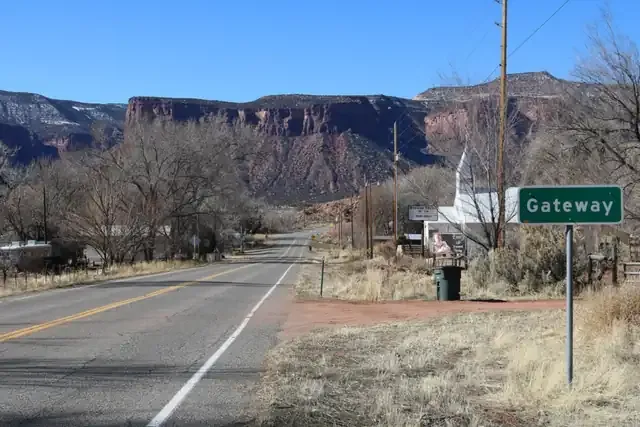
Gateway sits where West Creek comes out of Unaweep Canyon and joins the Dolores River, surrounded by red sandstone walls and mesas. Unaweep is often described as a canyon with two mouths, drained by two creeks flowing in opposite directions from a divide in the middle. Ute and earlier peoples used the area long before ranchers arrived; ranching, farming and lumber milling built the community, uranium mining carried it through the mid 20th century, and the Gateway Canyons resort, developed by Discovery Channel founder John Hendricks, has been the main employer in recent years.
The nearest full-service town is Grand Junction, about an hour's drive up Highway 141 and through the canyon, which shapes how every repair here is planned.
Septic in canyon country
Outside the resort's own system, Gateway homes drain to private septic systems permitted under Mesa County's onsite wastewater program. Many lots are on river terraces of sand, gravel and cobble, which drain fast but can carry effluent toward groundwater if a field is overloaded, while others sit on rockier ground near the cliffs. Tanks and fields were often placed wherever there was level ground, so lines can be long and wander. Older ranch houses sometimes have tanks nobody has located in years. Before any digging, a camera inspection and line locate show exactly where the pipe runs and where it is failing.
Roots along West Creek and the Dolores
Cottonwoods, willows and tamarisk crowd the river bottom, and their roots chase any moisture leaking from a septic line. A line that runs toward the river or under a big cottonwood is the most likely to fill with roots. Mechanical root cutting opens it, and a camera shows whether the joint is cracked badly enough that roots will be back next season. Keeping new trees well away from the tank and field saves trouble later.
Heat, cold and dry spells
Gateway is one of the warmer spots in western Colorado in summer, with records above 100 degrees, but clear winter nights in the canyon have dropped well below zero. A shallow line over rock, or a drain in an uninsulated wall or crawlspace, can freeze on those nights. Cabins and seasonal homes are most exposed. In summer, a house that sits empty for weeks can have its traps dry out, letting sewer gas in. Back at the house, open every faucet and flush each toilet so the traps refill before you settle in.
When a Gateway drain stops
- 01
Stop using water
A septic system can only take what the tank and field can hold.
- 02
Look at the tank area
Note any wet ground, odor or standing water.
- 03
Find the cleanout
It is usually where the line leaves the house.
- 04
Give clear directions
Tell the plumber the road, any gates and how far up a drive the truck can go.
Gateway warning signs
- Slow drains throughout the house
- A Gateway toilet that burps when the washing machine empties
- Odor in the yard or over the field
- Roots on the cable after clearing
- Water backing up into a tub or floor drain
Planning around the drive
Because most plumbers come from Grand Junction or Whitewater, a Gateway call is easier and often cheaper when it is planned. If drains are slowing rather than stopped, call early in the day and describe everything you have noticed, so the plumber brings a camera, a locator and the right cutting heads on one trip. Combining a septic pumping with a line cleaning and camera check can save a second visit.
What moves the price in Gateway
A simple fixture clog is the same work anywhere; the drive is what adds cost. Septic lines, root cutting, thawing and locating an old tank add time. Ask what a Gateway visit should run, including travel, before work starts.
Water supply and what it means for drains
Gateway homes outside the resort rely on wells or other individual water supplies; a federal survey of uranium-mill towns in 1960 already noted individual water and a community septic tank here. Well water in the Dolores and West Creek valleys can carry minerals that leave scale in fixtures and the first few feet of drain pipe, which catches hair and soap. A household that hauls or rations water also tends to use less of it, so drains get less flushing and buildup can settle in long, flat runs. If your Gateway house is on hauled water, a periodic cleaning of the main line keeps those slow-moving runs from closing.
Low water use is easy on a septic field, but it also means solids may sit longer in the line before reaching the tank. Running a full sink of water after heavy kitchen use helps push them through.
Working with Mesa County permits
Repairs that go beyond clearing a line, such as replacing a tank, moving a field or adding a bedroom that changes the system's size, fall under Mesa County's onsite wastewater program, with permits handled by Community Development in Grand Junction. Ask the plumber whether your Gateway repair needs a permit before work starts, so the job is done once.
Call if you notice
- Cottonwood roots in a line running toward the Dolores
- Wet ground over a Gateway leach field after a summer storm
- A tank overdue for pumping in an older ranch house
- Slow drains in a cabin used only part of the year
- A line frozen near the surface on a clear January night
Gateway drain questions
Is Gateway on public sewer?+
Not for most homes. The resort has its own treatment plant, but houses in the area generally use private septic systems.
Where do plumbers serving Gateway come from?+
Most come from Grand Junction or Whitewater, down Highway 141 through Unaweep Canyon.
Do Gateway septic lines freeze?+
They can. Gateway has recorded lows well below zero, and shallow lines over rock have little cover.