Denver · typical $150–$400
Sewer camera inspection in Denver
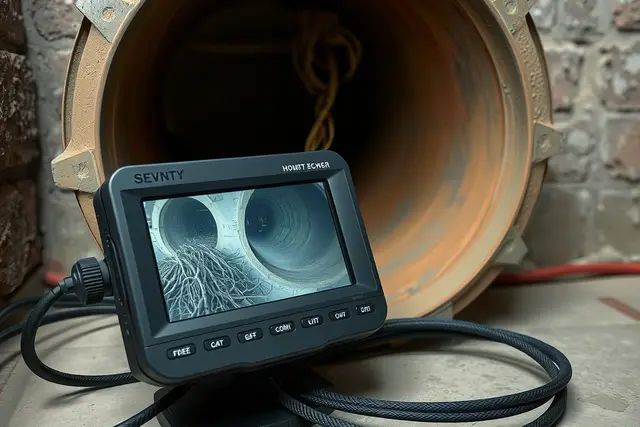
A sewer scope is a waterproof camera pushed down your main line on a flexible cable, recording every joint between the house and the city main. In Denver, where a lot of laterals are older than the people living above them, it's the clearest way to know what you own before you buy, dig or line a pipe.
Sewer camera inspection in Denver?
Answered 24/7
Including holidays and storms
Licensed local plumbers
Licensed in Colorado
Winter-ready
Frozen lines and thaw calls
Price ranges up front
Know the range before they come
What you own under a Denver yard
Denver locates and maintains the public sewer mains. The service line from your house, up to and including the tap where it joins the main, belongs to the property owner. In a neighborhood where the main runs down the alley, that can mean seventy or more feet of pipe under the back yard and sometimes under a detached garage, all of it your responsibility.
That's why a camera is worth more in Denver than in a newer suburb. You're not just checking for a clog; you're checking the condition of a pipe you'll pay to fix if it fails.
Pipe materials a Denver scope turns up
- Vitrified clay in homes from the early 1900s through the 1950s, with joints every few feet
- Cast iron under the basement slab, often scaled or rusted along the bottom
- Orangeburg (tar paper pipe) in some homes from the late 1940s into the 1960s, which deforms with age
- PVC where a lateral has already been replaced, sometimes only in part
Denver sewer camera inspection costs
| Job | Typical range |
|---|---|
| Scope from an accessible basement or yard cleanout | $150–$275 |
| Scope by pulling a toilet (no cleanout) | $225–$400 |
| Scope with locating and depth marked on the surface | $200–$400 |
| Scope added the same visit after clearing a clog | $100–$250 |
| Clearing a line before it can be scoped | $200–$500 |
Sewer scopes when buying a home in Denver
A general home inspection looks at what's visible. The lateral under a Denver yard isn't visible, and in an older house it's often the single most expensive thing that can go wrong. Buyers in Washington Park, Highland, Park Hill, Berkeley and other pre-war neighborhoods routinely order a scope during the inspection period for that reason.
Schedule it early, while there's still time to negotiate. If the video shows a broken section or heavy roots, ask the plumber for a written note of what they saw and roughly where. A repair quote based on that note gives you something concrete to bring to the seller.
Reading the video
The camera head usually displays a running distance counter. Every defect is tied to a footage number, so "roots at 42 feet" means something specific. Here's what tends to show up on Denver laterals: light root hair at clay joints, which is common and manageable; heavy root balls that nearly fill the pipe; offsets, where one pipe section has dropped below the next; bellies, sags where water stands; and cracks or missing pieces in clay or Orangeburg.
Standing water in a stretch of pipe is worth noting even if the line flows. A belly collects paper and grease, and it's usually the spot where the next clog will form.
Alley laterals and long runs
In much of central and north Denver, the main runs down the alley. A camera run from a front basement cleanout to an alley main can be eighty feet or longer, passing under the back yard, a fence and often a garage slab. Longer runs take a camera with more cable and sometimes a second access point. Mention an alley main when you book, so the plumber brings the right equipment.
Locating the line before anyone digs
Many cameras carry a small transmitter in the head. A plumber above ground uses a receiver to follow it, marking the route and depth at any defect. In Denver, where laterals wander under patios and garages, that mark tells you whether a repair means opening a lawn, a driveway or a garage floor. Before any digging, Colorado 811 marks the public utilities; the camera locate covers the private lateral that 811 doesn't.
When a Denver sewer scope makes sense
- Buying any Denver house built before about 1980
- Two or more main line clogs in a year
- Before finishing a Denver basement or building over the lateral
- After roots have been cut, to see what's left
- Before choosing between spot repair, pipe lining and full replacement
What the scope can't tell you
A camera shows the inside of the pipe. It doesn't measure wall thickness in cast iron, and it can't see past a blockage it can't push through. If the line is plugged, it needs to be opened first, then scoped. Heavy grease or scale can also hide cracks until the pipe is jetted clean, which is why some Denver plumbers recommend jetting before a final scope on old cast iron.
Scoping after a Denver backup
When a plumber has just cleared a main line, the pipe is about as clean as it will ever be, which makes it the best moment to scope. The video shows whether the cable found roots, a wad of wipes or a broken joint, and that answer changes what you do next. Wipes call for a household habit change. Roots at a single clay joint might call for cutting once a year. A collapsed section means the next backup is only a matter of time, and pricing a repair now beats paying for it after a flooded basement.
Cast iron under older Denver slabs
Inside the foundation, many Denver homes from the 1920s through the 1960s drain through cast iron buried under the basement floor. A camera run through that pipe often shows a thick, lumpy crust along the bottom and sometimes a channel worn right through, where the pipe has rotted from the inside and water now runs over soil. That damage is easy to miss from a front cleanout, so ask the plumber to scope the branch under the slab too if the basement has a bathroom or laundry.
Pipe lining needs a scope on both ends
Cured-in-place lining is popular for Denver laterals that run under garages and mature trees, because it avoids digging. A good lining job starts with a camera run to measure the line and spot the connections, and ends with a second run to confirm the liner is smooth and the tap is open. If you're getting lining quotes, ask to see both videos.
Booking and access
Find the cleanout before the visit if you can: it's usually a capped pipe near the front basement wall or a short standpipe in the yard. If the house is being sold, ask the listing agent to make sure the basement isn't blocked and the water is on. The plumber will run water during the inspection to see how it flows past each joint.
Common questions
How much is a sewer scope in Denver?+
Most run $150 to $400. A scope from an accessible cleanout sits at the lower end; pulling a toilet, a long alley lateral or locating depth adds to it.
Should I get a sewer scope before buying a Denver house?+
For older homes, yes. Repairs to a Denver lateral can run into the thousands, and the scope costs a small fraction of that.
Will I get the video?+
Ask for it. Most plumbers will share the recording with footage marked at the distance of any defect.