Boulder · typical $250–$700
Tree roots in Boulder sewer lines
Boulder protects its trees, and many of the biggest stand over the oldest sewer laterals in town. Living with both usually means managing roots on a schedule, then repairing the worst joints.
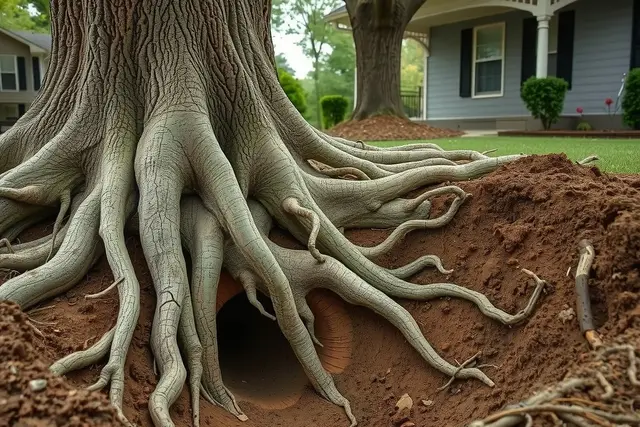
Tree root removal in Boulder?
Answered 24/7
Including holidays and storms
Licensed local plumbers
Licensed in Colorado
Winter-ready
Frozen lines and thaw calls
Price ranges up front
Know the range before they come
Old laterals, older trees
Mapleton Hill, Whittier, Goss-Grove and University Hill have homes from the late 1800s through the 1940s with clay laterals running under yards shaded by silver maples, elms and cottonwoods. Fine roots enter at the joints, and in a dry climate a slightly leaking joint is one of the best water sources around.
Managing it without losing the tree
- Cut roots on a schedule, before the season your line usually backs up.
- Jet after cutting if fine root hair regrows quickly.
- Scope to find the joints that are failing worst.
- Repair or line those joints so the tree and the sewer can coexist.
Hillside laterals
Homes on University Hill and near the foothills can have steep laterals. Roots plus a change in slope give solids a place to collect, so these lines often need cutting and jetting together.
What root work costs in Boulder
| Service | Typical range |
|---|---|
| Root cutting | $275–$650 |
| Cutting plus jetting | $500–$1,100 |
| Camera inspection | $175–$400 |
| Lining a section | $3,500–$9,000 |
Boulder's trees and old laterals
Boulder's older neighborhoods are known for their canopy, and many of the largest trees stand over the oldest clay laterals in town. Silver maples, cottonwoods and elms all send roots toward moisture, and a slightly leaking clay joint is an easy target in a dry climate. Because Boulder values and protects its trees, the long-term answer to root problems here is usually to fix the pipe rather than remove the tree.
Lining in Boulder
Pipe lining is particularly popular in Boulder because it seals root-prone joints without trenching through yards, sidewalks and tree roots. It requires the old pipe to be intact enough for the liner to pass, so a camera inspection comes first. If a section has collapsed, that part is dug and replaced and the rest can often still be lined.
Work near street trees or in the public right-of-way may involve the city, and a licensed plumber will coordinate any permits required.
A typical Boulder root call
- 01
Clear
Roots are cut so the house can drain again.
- 02
Jet
Fine root hair and debris are flushed out for a cleaner pipe wall.
- 03
Scope
The camera shows how many joints are affected and whether the pipe is intact.
- 04
Plan
Maintain on a schedule or line the affected joints, based on the video and quotes.
Hillside homes
On University Hill and near the foothills, steep laterals combine with roots to create lines that clog at the same spot repeatedly, usually where the grade flattens near the street. Cutting and jetting together, followed by a camera check, is usually the most effective approach on these lines.
Signs roots are back in a Boulder line
Root growth follows the seasons. In Boulder, lines that were cut in early spring often run well through summer and start slowing again by the following winter or spring. Watch for the lowest toilet gurgling when the washer drains, a basement floor drain that holds a little water after a shower, or a faint sewer smell near a cleanout. None of those mean an emergency yet, but they are a good prompt to book cutting before the line stops completely on a weekend.
Keep a note of the date of each cutting and what the plumber saw. After two or three visits you'll know your line's rhythm, which makes it easy to schedule maintenance just before trouble rather than just after.
Comparing maintenance against a permanent fix
A reasonable way to decide is to add up what you expect to spend on cutting and jetting over the next five to ten years and compare it with quotes for lining or replacing the affected section. If roots are in one or two joints and come back slowly, maintenance can be the sensible choice for a long time. If they're in many joints, come back within months, or the camera shows cracks and offsets, a permanent repair usually costs less over the life of the house and removes the risk of a backup into a finished basement.
Ask for written quotes that reference the same camera video, so you are comparing like with like.
Working around mature trees
When a section has to be dug and replaced in Boulder, the location of the tree matters. Trenching close to a large tree can damage its root system, and work near street trees may need city coordination. Plumbers often route around the critical root zone or use trenchless methods for the part of the line closest to the trunk. Mention any trees you're especially concerned about when you book, so the plan can protect them.
Rental and student housing near campus
In the neighborhoods around CU, many homes are rentals with older laterals and heavy use. Roots combined with wipes and grease make for frequent clogs. Owners who schedule cutting and jetting between leases, and give tenants clear guidance on what goes in the toilet and the kitchen sink, see far fewer emergency calls during the school year.
Planning around the seasons
Schedule routine root cutting in Boulder for late winter or early spring, before root growth peaks and before the busy season for plumbers. Booking ahead gives you more choice of appointment time and avoids emergency rates.
Table Mesa and Martin Acres
South Boulder's mid-century neighborhoods, including Table Mesa and Martin Acres, have laterals from the 1950s and 1960s under yards with mature trees. Root calls here are common in spring. Many of these lines are good lining candidates because they are mostly intact, with roots concentrated at a handful of joints that the camera can locate exactly.
Root cutting costs in Boulder
Root cutting in Boulder tends to be priced a bit higher than in the wider metro, reflecting local costs and the age and length of many lines. Prices rise with heavy roots, long or steep laterals and hard-to-reach cleanouts. A camera inspection and jetting are usually separate line items. For lines that need cutting more than once a year, the combined cost often makes lining worth comparing. Ask for a written range covering cutting, jetting and the camera, so you know what to expect before the work begins.
Booking routine cutting during the week, outside the spring rush, often helps with both cost and scheduling.
Common questions
Can I remove a tree to stop sewer roots in Boulder?+
Tree removal may require permission in some cases, and it usually isn't necessary. Repairing the affected joints is the more common fix.
How often should Boulder sewer roots be cut?+
Commonly every one to two years for lines with a known root problem.
Should I scope before buying an older Boulder home?+
Yes. Root-damaged clay laterals are common and repairs can be costly.