Colorado Springs · typical $250–$700
Tree roots in sewer lines in Colorado Springs
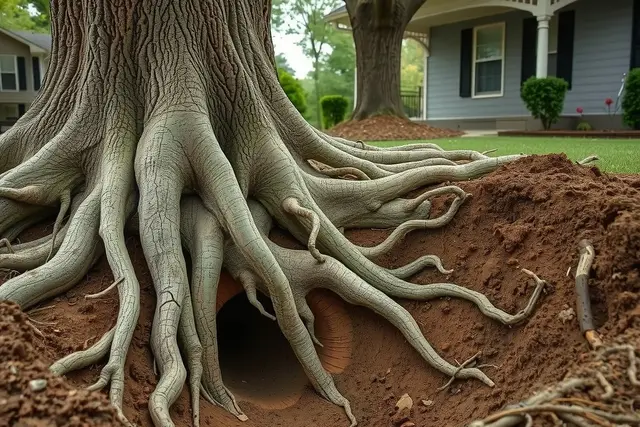
In Colorado Springs, the homes with root problems are easy to predict: older streets with big shade trees and clay sewer laterals. Roots don't break good pipe. They find a cracked joint, follow the moisture in, and grow into a mat that catches everything the house sends down.
Tree root removal in Colorado Springs?
Answered 24/7
Including holidays and storms
Licensed local plumbers
Licensed in Colorado
Winter-ready
Frozen lines and thaw calls
Price ranges up front
Know the range before they come
Who pays when roots block a Springs sewer line
Colorado Springs Utilities maintains the wastewater mains. The service line running from your house to that main is the customer's to maintain, and CSU covers backup damage only when its own main and its own negligence caused it. When roots grow into your lateral, the cutting, the camera work and any repair are on the homeowner.
If you're unsure whether the blockage is yours or the main's, a plumber's camera answers it. If the main is the problem, the video gives you something specific to show CSU.
Where roots hit hardest in Colorado Springs
The Old North End, the streets around Patty Jewett Golf Course, the Westside around Old Colorado City and the streets near the Broadmoor all have mature trees planted decades ago over clay laterals. Elms, cottonwoods along Monument and Fountain Creek, and big silver maples send roots well beyond their drip lines, and a single tree can reach the lateral of the house next door.
Colorado Springs root removal costs
| Job | Typical range |
|---|---|
| Cutting roots from an accessible cleanout | $250–$450 |
| Root cutting with no cleanout (toilet pulled) | $325–$600 |
| Root cutting plus camera inspection | $350–$700 |
| Hydro jetting after cutting to flush root hair | $350–$900 |
| Root foaming treatment after clearing | $150–$350 |
How roots get into a Springs lateral
Many of the homes built in Colorado Springs before the 1960s drain through clay pipe joined every few feet. Over decades those joints loosen, and the fine gap at each one lets out warm, moist air and a little water. In a semi-arid city that gets around sixteen inches of precipitation a year, that moisture is a magnet for tree roots. A hair-thin root enters, thickens and branches until it nearly fills the pipe.
Dry summers make it worse
Root intrusion in the Springs tends to speed up in late summer and in dry winters, when lawns and soil dry out and the sewer line is the only steady moisture on the lot. If your line backs up in August or during a winter with little snow, roots are a strong suspect. Deep watering of big trees during dry spells can make them less desperate to find your pipe.
Cutting, jetting and what comes next
A plumber typically runs a cable machine with a cutting head through the line from the cleanout, slicing the roots at each joint. Jetting afterward flushes out the fine root hair the blade leaves behind. A camera pass then shows how many joints were affected and whether the pipe itself is cracked or offset. Without that last step, it's guesswork whether you need a yearly cutting or a repair.
Cutting doesn't remove the reason the roots got in. The cracked joints are still there, and the same tree will be back in the pipe, usually within one to two years.
Lining versus replacing a root-damaged line
If the camera shows roots at a handful of joints in otherwise sound pipe, cured-in-place lining seals those joints from the inside without digging up a mature yard. That appeals in older Springs neighborhoods where the lateral runs under old trees and stone walls. A line that is broken, crushed or badly offset usually needs a section replaced instead. Ask for the video and a quote on both options before deciding.
Signs of roots in a Colorado Springs sewer line
- A gurgling toilet in a Colorado Springs home with a large tree in the front yard
- A main line clog that returns every year or two
- Slow drains in late summer after weeks without rain
- A cable that comes back wrapped in fine roots
- A sunken patch of lawn over the lateral
Planting near the sewer line
If you're replacing a tree in a Springs yard, put it well away from where the lateral runs, and pick a species with less aggressive roots. A camera locate marks the line's route on the surface, which takes the guessing out of choosing a spot. Willows, cottonwoods and silver maples are the worst offenders; smaller ornamental trees are usually safer near a sewer line.
Root foaming in Colorado Springs
After the line is clear, some plumbers offer a foaming root treatment. The foam fills the pipe and coats the joints, killing the roots inside the line without harming the tree. It doesn't seal cracks, so it's a maintenance step, not a cure, but on a Springs lateral with roots at many joints it can stretch the time between cuttings. CSU has pointed homeowners to root-inhibiting treatments such as copper sulfate for the same reason.
Scrub oak and ponderosa on the west side
Homes along the foothills, from the Broadmoor area up toward Cedar Heights and Mountain Shadows, sit among scrub oak and ponderosa pine on decomposed granite and rocky soil. Laterals there are often newer and deeper than in the Old North End, but the trees are big and the soil drains fast, so roots travel far looking for water. A lateral on a steep lot can also run faster than it should, leaving solids behind when the water outruns them, and roots grab that debris.
Newer neighborhoods and young trees
On the north and east sides, in neighborhoods built since the 1980s, PVC laterals with glued joints keep most roots out. The risk there grows slowly as the trees planted with the houses reach full size. If a newer Springs home starts showing root symptoms, it usually points to a cracked joint from settling soil or damage during landscaping, and a camera inspection will find it.
Insurance and documentation
Homeowner's insurance often treats a root-damaged sewer line as maintenance, though some policies offer service line coverage as an add-on. Whatever the policy says, keep the plumber's invoice and any camera video. If a backup ever leads to a claim with your insurer or with CSU, a record of regular root cutting shows the line was looked after.
Before the plumber arrives
Stop running water once you see a backup. Find the cleanout if you can; in many older Springs homes it's in the basement near the front wall or just outside the foundation. If the line has been cut for roots before, note when, because a shorter gap between clogs means the roots are winning and a repair is worth pricing.
Common questions
How much does root cutting cost in Colorado Springs?+
Most root clearing jobs run $250 to $700, depending on access, how heavy the roots are and whether a camera inspection is added.
Will cutting the roots kill my tree?+
No. Cutting removes the roots inside the pipe. A root foaming treatment can slow regrowth in the line without harming the tree.
How far from a sewer line should I plant a tree?+
Colorado Springs Utilities suggests keeping trees at least 5 feet from a sewer line, and farther is better for big species.