Littleton · typical $250–$700
Tree roots in Littleton sewer lines
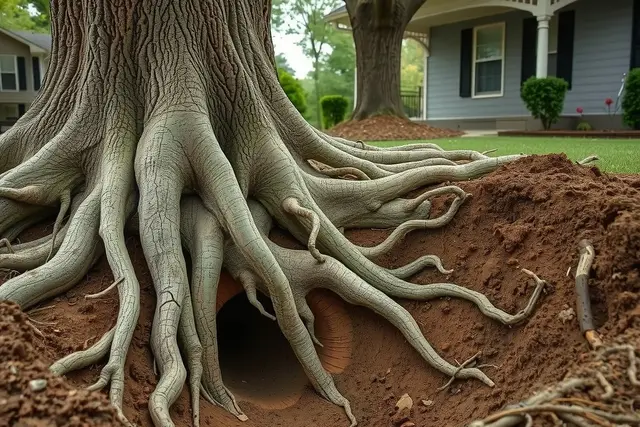
The trees planted when Littleton's post-war neighborhoods were new are now sixty or seventy years old, and their roots have had decades to find the joints in the sewer laterals below them.
Tree root removal in Littleton?
Answered 24/7
Including holidays and storms
Licensed local plumbers
Licensed in Colorado
Winter-ready
Frozen lines and thaw calls
Price ranges up front
Know the range before they come
Mid-century ranches, mature trees
Brick ranches and split-levels from the 1950s to 1970s make up a lot of Littleton. Many still have clay laterals. Large shade trees in front yards and along the street sit right above the line, and fine roots enter through joints that have shifted a little over the decades.
Backups typically show up first at the basement floor drain or a lower-level bathroom.
Signs it's roots and not something flushed
- The line backs up at roughly the same time of year
- The plumber pulls roots or hair-like strands out on the cable
- Clearing works for a year or two, then it happens again
- There's a large tree within about 30 feet of where the sewer runs
Repair options if it keeps happening
When a camera shows the same joint failing every time, a spot repair or a liner over that joint can stop the cycle without removing the tree. If several joints are compromised or the pipe is cracked, replacing the lateral may cost less over the long run than repeated cutting. Get the video and a written estimate before deciding.
What root work costs in Littleton
| Service | Typical range |
|---|---|
| Root cutting from a basement cleanout | $250–$600 |
| Cutting plus jetting | $450–$1,000 |
| Camera inspection | $150–$400 |
| Lining the affected section | $3,000–$8,000 |
Why Littleton's ranches get roots
Littleton's brick ranches from the 1950s and 1960s were often planted with shade trees in the front yard, right above the sewer lateral. Sixty years later those trees are large and their roots have spread under the lawn. The lateral, frequently clay, has joints every few feet that have shifted slightly with time. Roots find the moisture at those joints and grow inside, and the backups that follow usually show up in spring at the basement floor drain.
Because these homes were built at roughly the same time, neighbors on the same street often have the same problem, sometimes in the same season.
Keeping the tree
Few Littleton homeowners want to remove a mature shade tree, and it's rarely necessary. Regular cutting keeps the line flowing, and lining the affected joints stops roots from getting back in without digging. When you're comparing options, ask for the camera video and quotes for both continued maintenance and lining, so the decision is based on real numbers.
What the camera usually shows
- 01
Fine root hair at a joint
Early intrusion. Cutting and jetting clear it.
- 02
A root mat filling part of the pipe
Advanced intrusion. Cutting now, consider lining.
- 03
Roots plus a crack or offset
The joint is failing. Lining or a spot repair is the long-term fix.
- 04
Clear joints elsewhere
Good news. The problem is limited and easier to fix permanently.
Districts and permits
Littleton addresses are served by several sanitation districts. Repairs that involve the public right-of-way or the connection to the main may require coordination with your district and permits, which a licensed plumber handles. Work entirely on your property is usually simpler.
Spring is root season
In Littleton, root backups cluster in spring. Trees wake up, roots start growing, and the root mat inside a clay line thickens just as households start using more water for laundry and cleaning. If your line has had roots before, the best time to schedule cutting is late winter, before that growth spurt. A routine appointment then is usually cheaper and much less stressful than an emergency call when the basement floor drain is overflowing.
What to expect on the cutting visit
The plumber will open the main cleanout, usually in the basement near the front wall, and run a cable fitted with a root cutting head toward the street. The cutter shaves roots off the pipe wall as it passes. Once the line flows, many plumbers follow with a camera to see how many joints had roots and whether the pipe is otherwise sound. Some recommend jetting afterward to remove the fine root hair the cutter leaves behind, which extends the time before roots return.
Neighbors with the same problem
Because many Littleton streets were built at the same time with the same materials and the same kind of trees, it's common for several neighbors to have root problems at once. Comparing notes can be useful: if a neighbor lined their lateral and hasn't had trouble since, that's helpful information. Your own line still needs its own camera inspection, though, because root location and pipe condition vary even between adjacent houses.
Lining versus replacement in Littleton
For Littleton lines with roots at several joints but no collapse, lining is usually the cleaner option. It seals every joint at once and leaves the yard and trees untouched. If a section has collapsed or the pipe is badly deformed, that part has to be replaced, often by digging a small pit and replacing a few feet, after which the rest of the line can be lined. The camera footage decides which approach is possible. Ask the plumber to show you the exact spots that drive the recommendation.
Some homeowners choose to replace the entire lateral with PVC, especially if they're also adding a cleanout or reworking landscaping. It's more disruptive but results in a new line from the house to the main.
Keeping cost under control
Routine root cutting scheduled during regular business hours is almost always cheaper than an emergency call on a holiday weekend. If you know your line has roots, put a reminder on your calendar for late winter each year. Ask whether the plumber offers a lower rate for scheduled maintenance, and keep the invoice and video from each visit to track how quickly roots return.
Landscaping and new trees
If you're planting new trees, keep them well away from the path of your sewer lateral. A camera with a locator can mark the line's route on the surface so you know where not to plant. Smaller, less aggressive species near the line reduce problems for the next owner as well.
Questions to ask before cutting
Ask whether the visit includes a camera inspection, whether jetting is recommended for your line and what the price range is for each. Ask how often the plumber expects you'll need cutting based on what they see. Clear answers help you budget and decide when a permanent fix makes more sense.
Common questions
Do I have to cut down the tree?+
Usually not. Repairing or lining the joint stops intrusion while keeping the tree.
How do I know where my sewer line runs?+
A plumber can locate it with a transmitter in the camera head and mark it on the surface.
Which sanitation district serves my Littleton address?+
Several districts serve the area; the name is on your sewer bill.