Denver · typical $250–$700
Tree roots in Denver sewer lines
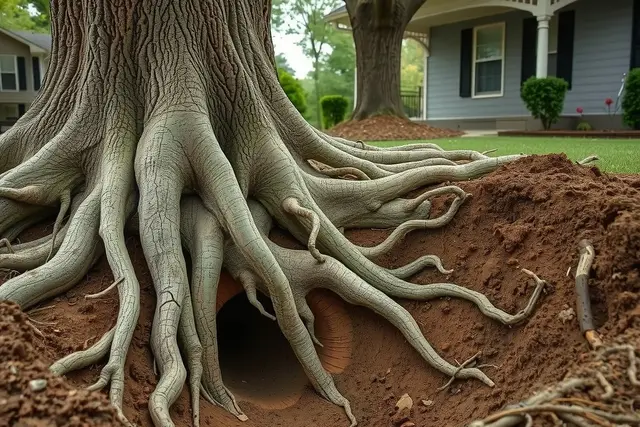
Denver's tree canopy is one of the city's best features and one of the main reasons its older sewer lines back up. The trees aren't the problem on their own; it's the combination of big roots and century-old clay pipe.
Tree root removal in Denver?
Answered 24/7
Including holidays and storms
Licensed local plumbers
Licensed in Colorado
Winter-ready
Frozen lines and thaw calls
Price ranges up front
Know the range before they come
Which Denver homes see it most
Homes built before roughly 1960 with clay laterals, especially on streets lined with silver maples, elms, cottonwoods and ash. The parkway strip between sidewalk and street is where many of those trees grow, and it's also where many laterals run on their way to the main.
A realistic plan
- 01
Cut the roots
A root-cutting head on a large cable opens the line from the cleanout.
- 02
Scope the line
The video shows how many joints have roots and whether the pipe is cracked or offset.
- 03
Decide on maintenance or repair
One or two root joints can be managed with cutting every year or two. Many joints, cracks or a collapse usually mean lining or replacing the lateral.
Timing
If your line backs up at the same time each year, book the cutting a month or so before that, not after the basement floods. Pair it with hydro jetting in Denver when fine root hair keeps coming back quickly.
What root work costs in Denver
| Service | Typical range |
|---|---|
| Root cutting from a cleanout | $250–$600 |
| Root cutting plus hydro jetting | $450–$1,000 |
| Camera inspection | $150–$400 |
| Lining one section of lateral | $3,000–$8,000 |
| Full lateral lining | $5,000–$12,000+ |
Denver's street trees and your lateral
Many older Denver streets have a tree lawn between the sidewalk and the curb, planted decades ago with elms, maples, ash and honey locust. Sewer laterals often pass right under those trees on their way to the main. Roots don't damage sound pipe, but clay pipe joints that have shifted even slightly give them a way in. Once inside, fine roots form a mat that catches paper and waste until the line stops.
The tree may belong to the city even though the lateral is yours. If a city tree is the clear cause, it's worth asking Denver's forestry office what applies before doing anything to the tree itself.
Cut, jet or line?
Cutting removes roots at the pipe wall and restores flow. Jetting after cutting clears the fine root hair the cutter leaves behind, so the line stays clear longer. Lining seals the joints so roots can't get back in, which ends the cycle without removing the tree or digging up the parkway. For a Denver lateral with roots at one or two joints and sound pipe otherwise, cutting every year or two is often reasonable. For roots at many joints, lining usually wins over time.
A typical root plan
- 01
Year one
Clear the line, run a camera, save the video and note the distance to each root joint.
- 02
Before the next spring
Schedule cutting before the season your line usually backs up.
- 03
Every few years
Re-scope to see whether roots are spreading to new joints.
- 04
When it adds up
Get lining quotes once cutting costs approach the cost of a permanent fix.
Signs roots are returning
Drains slow gradually over a few weeks, toilets gurgle when other fixtures drain, and the basement floor drain holds water longer than usual. If it's been a year or more since the last cutting and you notice these signs, book a visit before the line stops completely.
Root work before selling or buying
In Denver's older neighborhoods, sewer scopes are a routine part of home inspections, and roots are one of the most common findings. If you're selling, having the line cut and scoped beforehand lets you address problems on your own terms rather than negotiating under deadline. If you're buying, a scope that shows heavy roots or broken pipe gives you a basis for a repair request or credit. Either way, keep the video and the plumber's notes with your home records.
Trees on your property versus the street
Roots in your lateral may come from a tree in your yard, a neighbor's tree or a street tree in the parkway. The source doesn't change how the line is cleared, but it does matter if you're considering removing or pruning a tree. Removing a tree doesn't immediately stop roots already in the pipe, and some species send roots a long way. In most cases, sealing the pipe is a better long-term answer than removing a healthy tree.
Root foaming treatments
After cutting, some Denver plumbers offer a root treatment foam that is pushed through the line to coat the pipe and slow regrowth. It doesn't replace cutting and won't fix a cracked or offset joint, but on lines with moderate intrusion it can stretch the time between visits. Ask whether it's suited to your line, what product is used and how often it needs repeating. On a line with roots at many joints, the money may be better put toward lining.
Avoid pouring chemical root killers or copper sulfate into toilets on your own. They can damage older pipe and fixtures and won't clear roots that are already blocking the line.
How lining works on a Denver lateral
Lining starts with jetting the pipe clean and running a camera to confirm it's intact enough. A flexible liner soaked in resin is then pulled or inverted into the old pipe from the cleanout and inflated so it presses against the walls. Once the resin cures, the result is a smooth, jointless pipe inside the old one. Roots can't get through, and the work usually needs no trench across the yard or the tree lawn. In most homes it's completed in a day.
Sewer repairs and city permits
Repairs that involve digging in the street, sidewalk or tree lawn in Denver usually require permits and sometimes coordination with the city. A licensed plumber or sewer contractor handles that paperwork. Work done entirely on your property is generally simpler. If a quote includes work in the public right-of-way, ask how permits and restoration of the sidewalk or street are handled and included.
Getting the most from a camera inspection
Ask the plumber to note the distance from the cleanout to each root joint and any defects. Have them use a locator to mark the spots on the surface if a repair might be needed. Keep the video file. With that information, you can get comparable quotes from more than one contractor and track how the line changes over time.
Common questions
Will cutting roots kill the tree?+
No. The roots removed are the small ones inside the pipe. The tree is unaffected.
How long until roots come back?+
Often one to two years, because the joint they entered is still open.
Is root damage covered by insurance in Denver?+
Insurers generally treat roots as wear and maintenance, so the pipe work is rarely covered. Water damage inside the house may be, depending on your policy and endorsements.